

Serving Jurupa Valley, CA and surrounding areas.(951) 555-0159
SkyVale Jurupa Valley Concrete

Concrete for the Hillside Tracts of Diamond Bar, CA, Built 1960 to 1989

SkyVale Jurupa Valley Concrete replaces drives, patios and walls in Diamond Bar, 20 miles west of our Limonite yard. Nearly nine homes in ten here date from 1960 to 1989, and sit on clay that changes size.

Google reviewsFacebook reviewsBetter Business Bureau reviews5.0 Stars Rated by our customers · Google, Facebook and the BBB
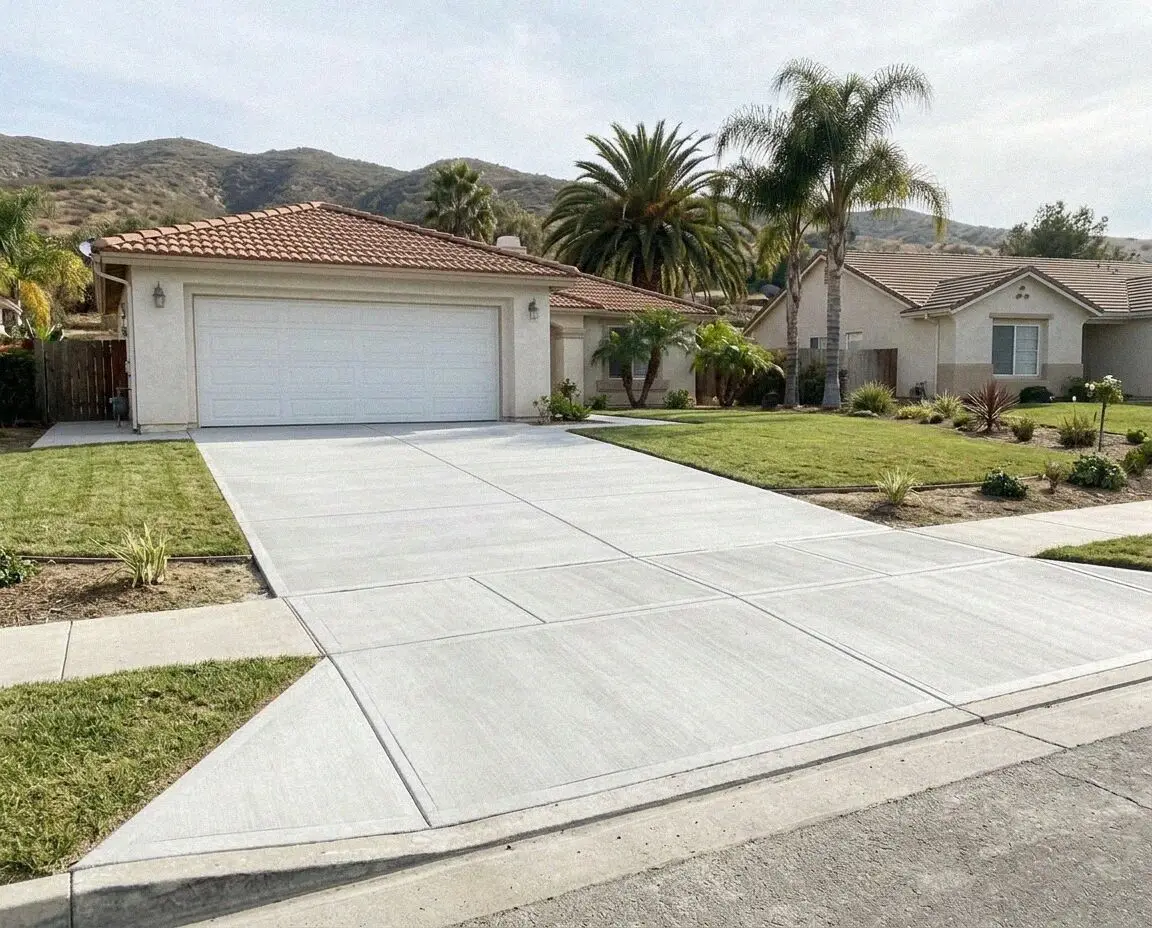
A replaced concrete driveway on a hillside street in Diamond Bar

Why the Clay Under Diamond Bar Changes Size

The soil survey describes the clay on these hills as smectitic. Smectite draws water in between its own layers, so the ground itself gets bigger in winter and smaller by August.

It is mapped right across the town. The north slopes off Grand Avenue come up as Zaca, classed vertic, which is the survey saying shrink and swell outright. The steep ground around the gated Country in the south is Nacimiento clay loam on grades of 30 to 50 percent. Through the built-up middle the survey maps an urban complex whose soil is Arbolado, smectitic again. Very little of this town is founded on anything that stays the same size all year.

A slab does not crack because the concrete is weak; it cracks because one part of what it is sitting on rose while another did not. The edge nearest a downspout or an irrigation line swells first, and the middle of a wide drive is the last to move. So we take the topsoil off to firm material, lay and compact 4 inches of Class 2 base to break the contact, run number 4 steel on an 18 inch grid, and cut joints at 10 feet rather than 12 so the movement has somewhere planned to go.

Concrete Work the Diamond Bar Tracts Need

Of 18,969 homes counted here, 16,590 were finished between 1960 and 1989, which puts the original flatwork at 35 to 65 years old and most of it at or past what a slab is built to last.

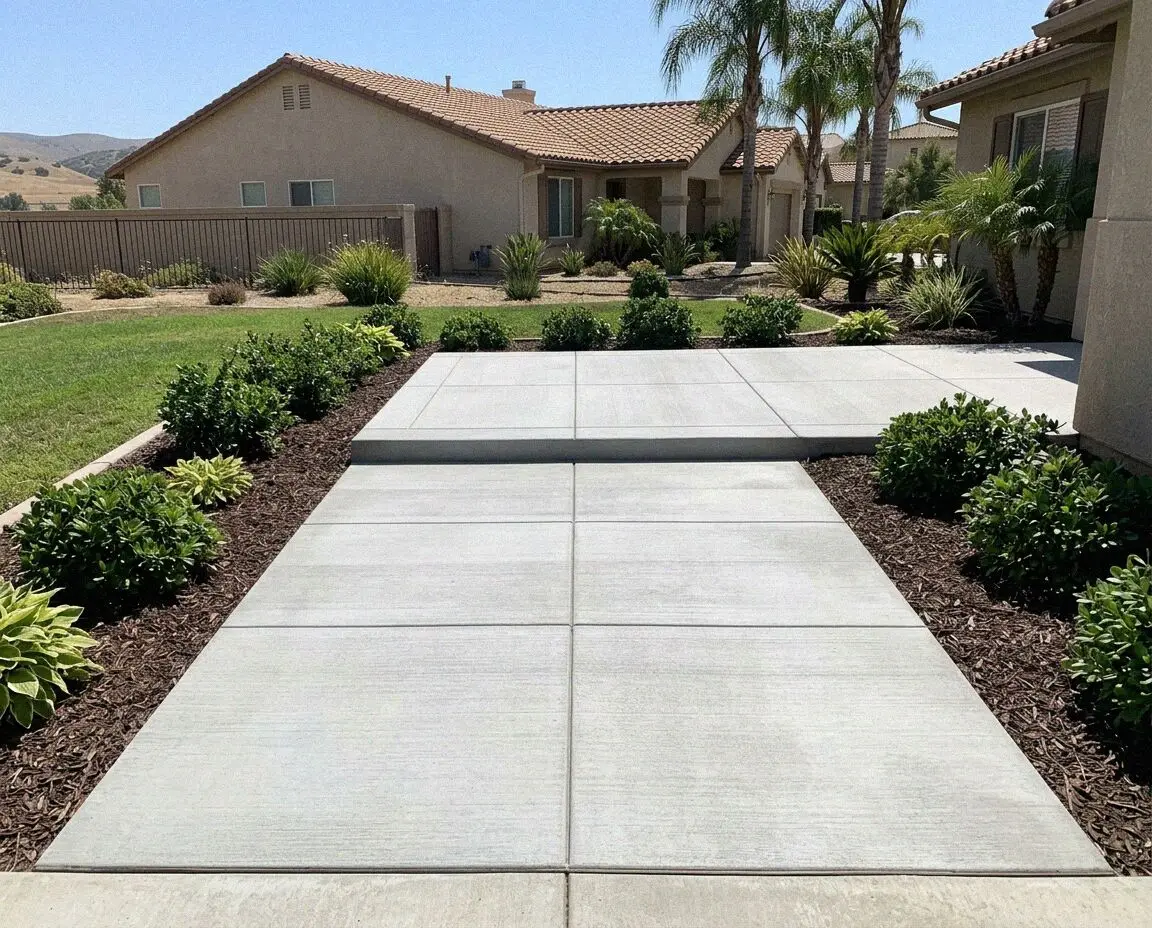
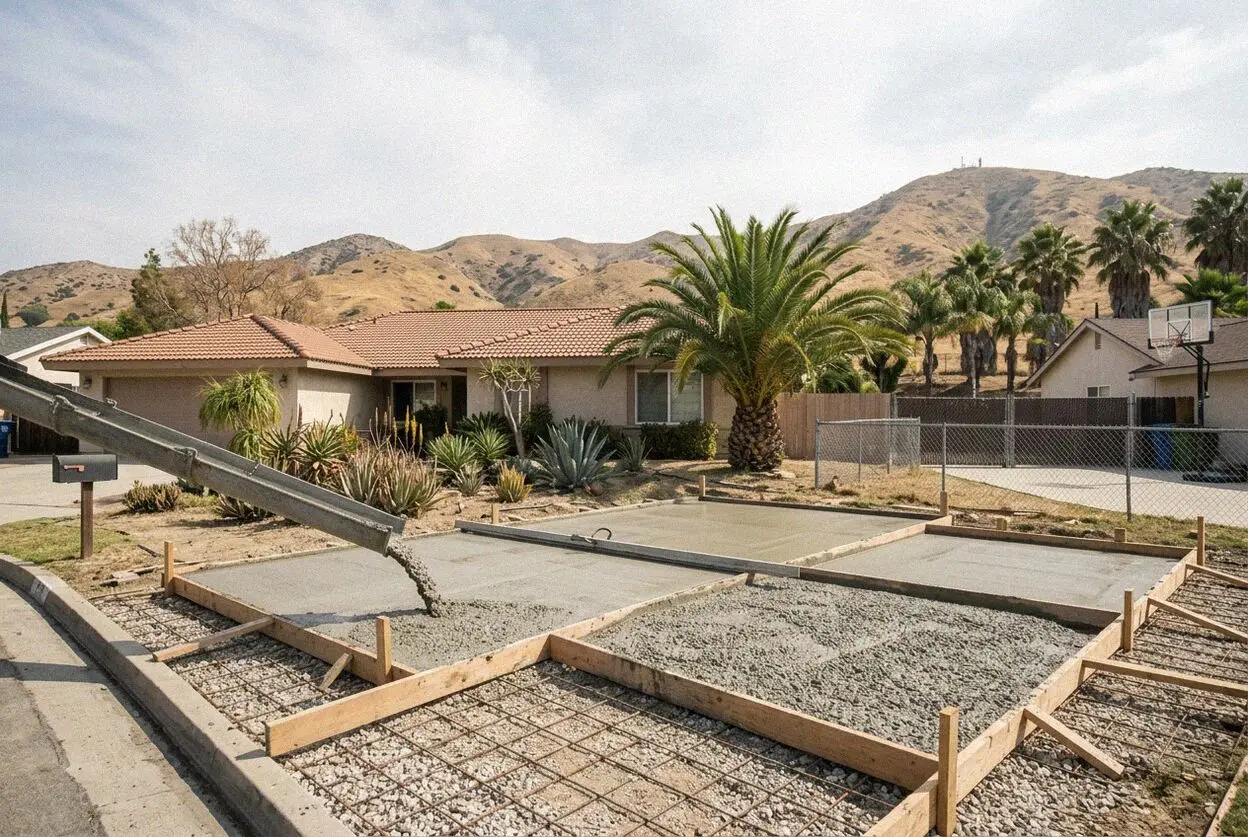
Newly poured concrete driveway running to a Jurupa Valley home

Concrete Driveway Building

A drive here climbs off a curving street to a garage set above it, poured at 4 inches with no steel when the tract went in. Decades of clay moving under it open the joints and step the panels. We rebuild the subgrade, pour 5 inches with number 4 steel and joint every 10 feet.
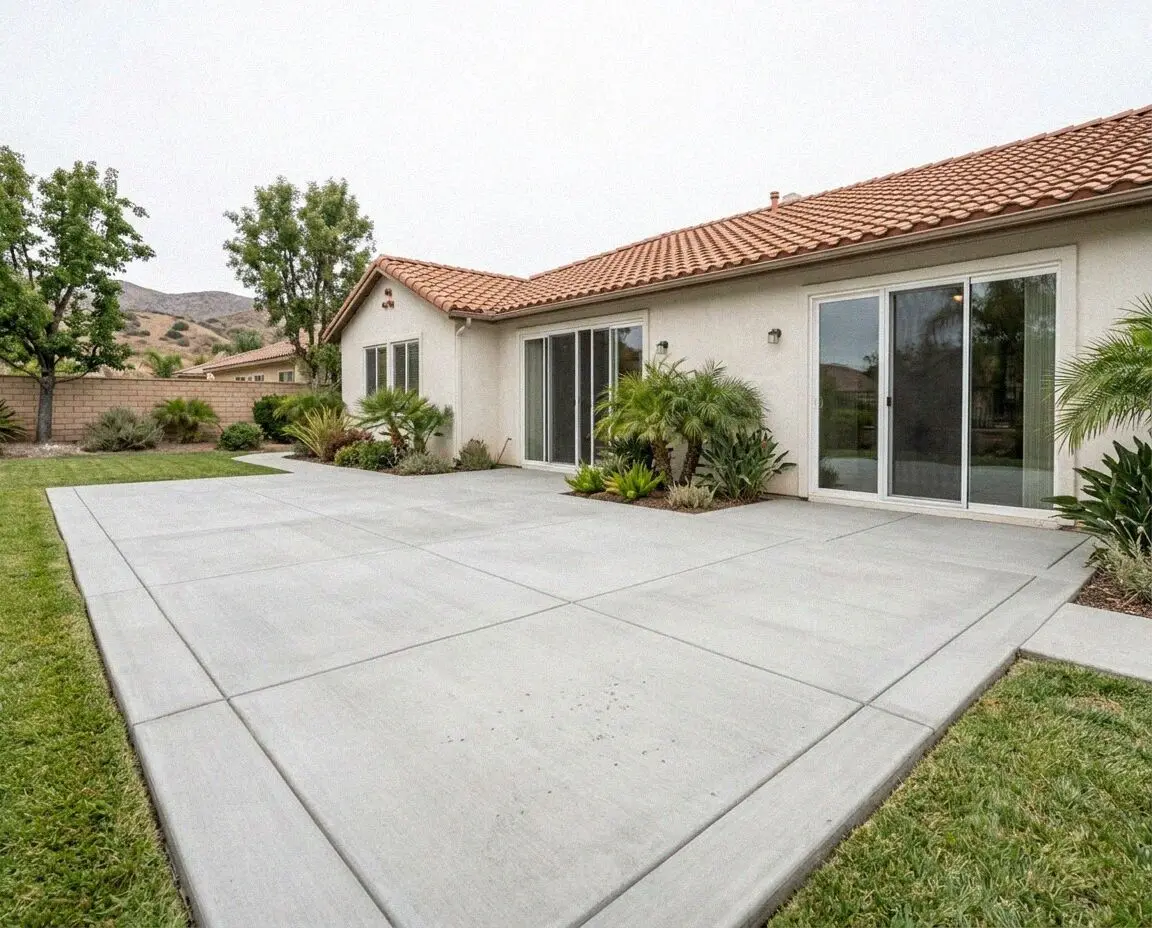
A wide sand-colored concrete patio behind a Jurupa Valley home

Concrete Patio Construction

A back yard on these lots is a shelf cut into the hill, bounded on one side by a cut face and on the other by a drop. We keep the slab clear of the toe of the cut, fall it toward the side of the lot rather than the fence, and set a hard edge where the ground falls away.

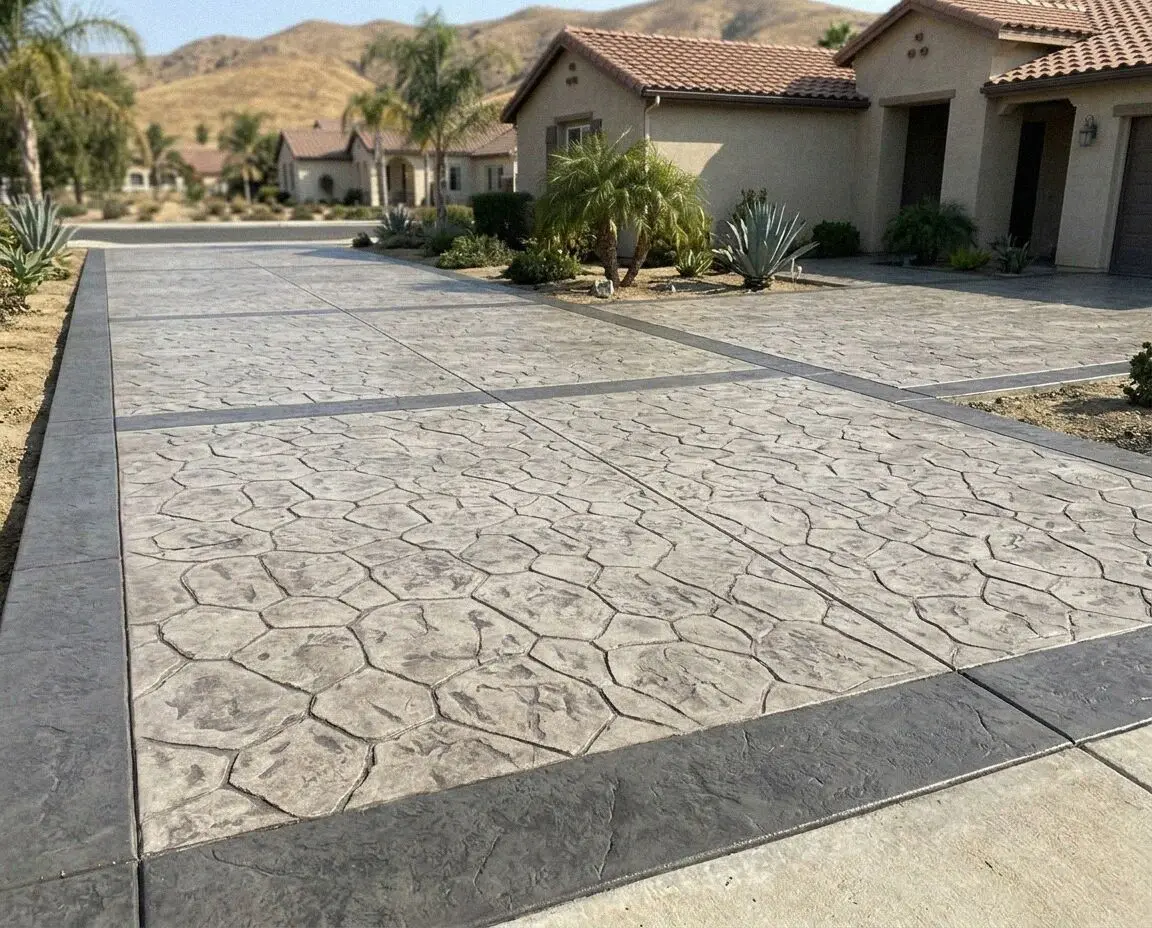
Stamped concrete patio in a slate pattern at a Jurupa Valley home

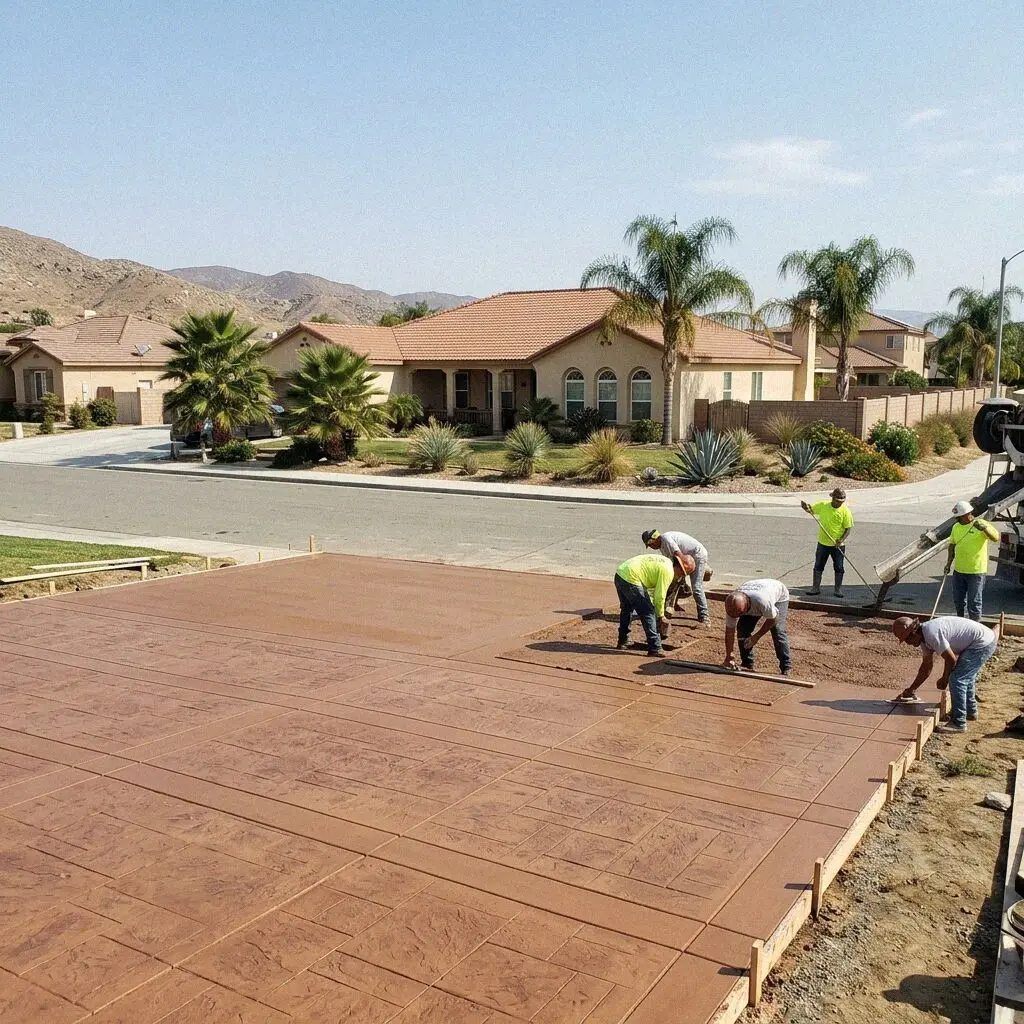
Stamped Concrete Services

The tract elevations here carry brick and tile detailing the plain gray apron never matched. A stamped ashlar or slate is cast into the slab and colored through the mix, so a hairline from ground movement reads as a line in the pattern rather than a split across a bare field.

A newly poured sidewalk run at a Jurupa Valley home

Concrete Sidewalk Building

Front walks laid when the tracts went in are lifting at the joints, mostly from clay heave rather than from roots, since the street trees here are young by comparison. Anything in the right-of-way takes an encroachment permit from Public Works, which we lodge before we cut.

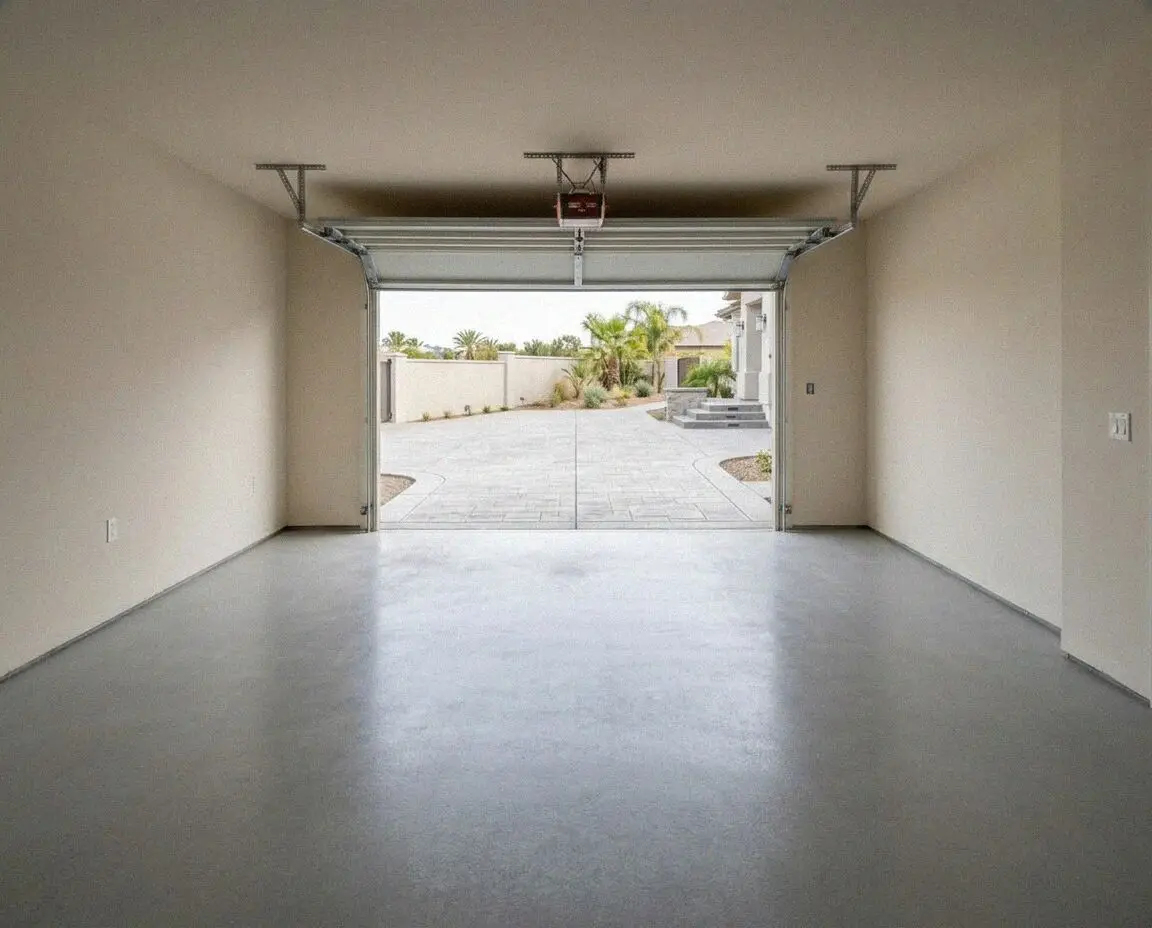
Finished concrete garage floor with sawn joints in Jurupa Valley, CA

Garage Floor Concrete

Garages of this era sit on the same untreated clay as the drive, and a conversion is what exposes it. Before a floor is coated or a room framed we test it for moisture, because clay under a slab holds water for months and a coating over that blisters and lifts within a year.

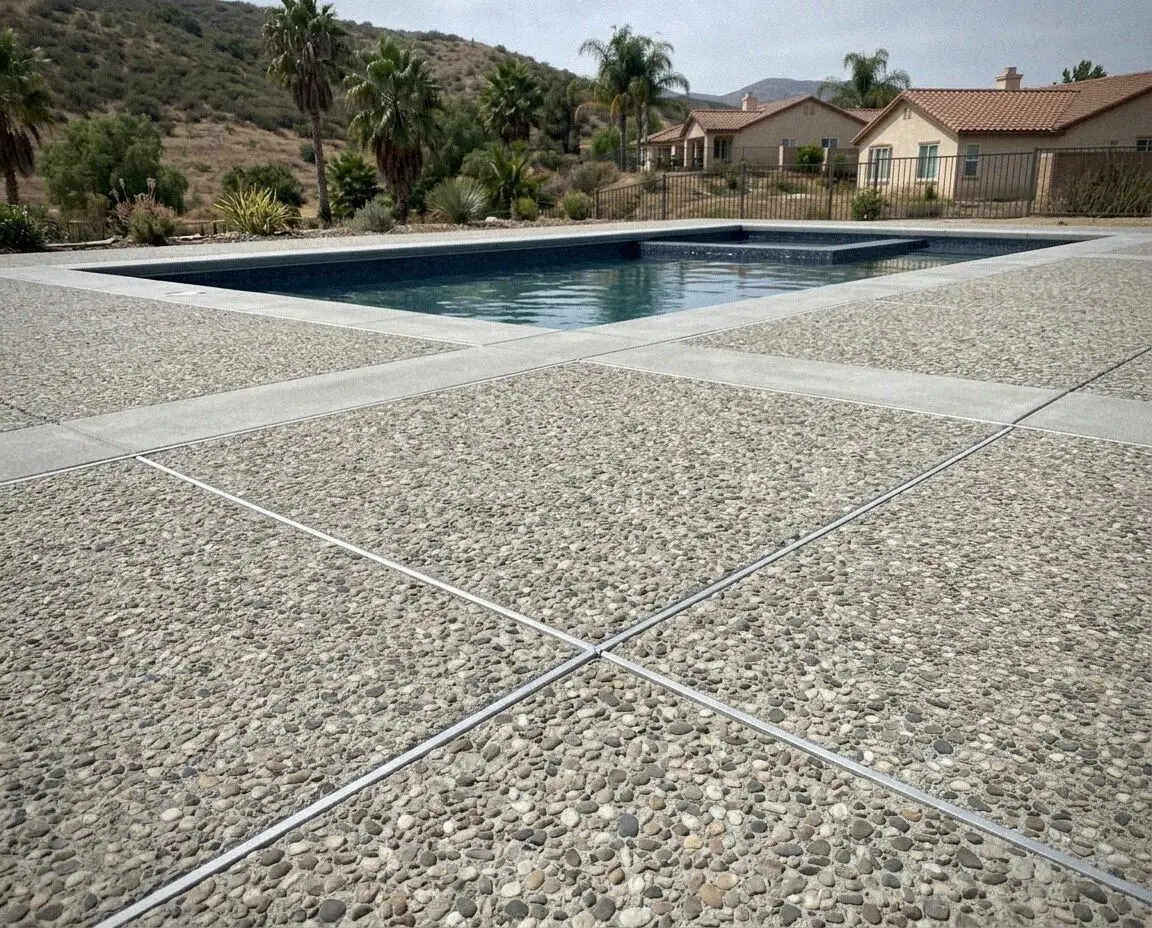
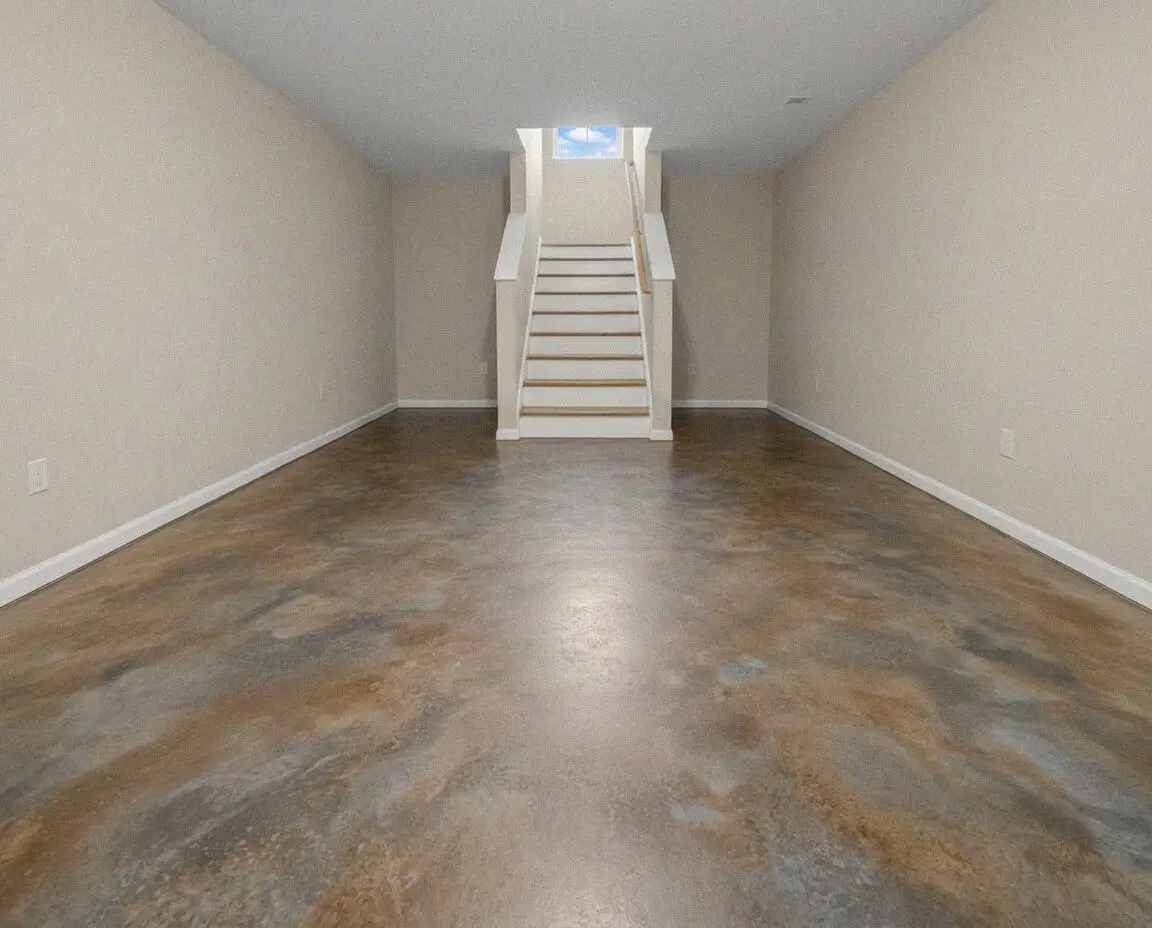
Washed aggregate and stained concrete at a Jurupa Valley home

Decorative Concrete

Sun on a west-facing hill lot is unfiltered, and a topical stain on that aspect goes patchy in three or four summers. Color goes into the mix instead, and the finish is a broom or light texture rather than a gloss seal, so a damp slab on a grade is still safe to walk down.

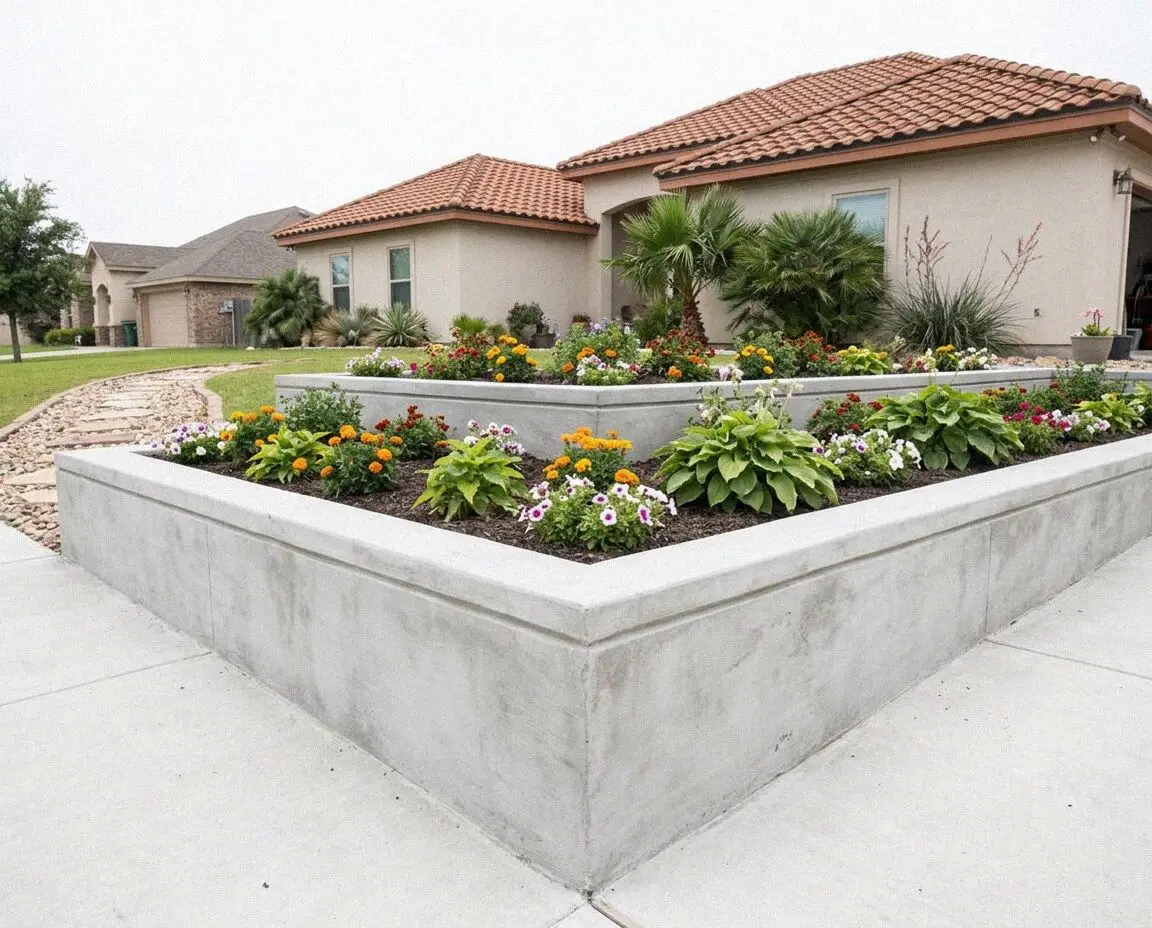
A finished concrete retaining wall holding a graded pad in Jurupa Valley

Concrete Retaining Walls

This is where the city sets its own line. It publishes that a wall not over three feet, measured from the bottom of the footing to the top of the wall, usually needs no building permit, a foot under the state exemption. Above that it is drawn, footed into firm ground and drained.

Power troweled interior concrete floor inside a Jurupa Valley ADU

Concrete Floor Installation

Accessory units and converted garages both begin as a floor, and on this ground the floor is the whole risk. We condition and compact the subgrade rather than pour onto dry clay, lay a 10 mil barrier, run steel through the slab and finish it flat enough for tile.

Show All Concrete Services

The SkyVale Jurupa Valley Concrete crew mid-pour at a home in the Jurupa Valley area

Sixty Years of Tract Building in Diamond Bar

This was one company town before it was a city. Transamerica bought 8,000 acres of Brea Canyon in 1956 and master-planned it, the first model homes went up in 1960, and the place did not incorporate until 18 April 1989, when it became the 86th city in Los Angeles County. Everything about the flatwork follows from that: 7,909 homes date from the 1980s alone, and fewer than 250 were standing before 1950.

The counter is the Building and Safety Division at 21810 Copley Drive, open 7:30 to 5:30 Monday to Thursday and 7:30 to 4:30 on Friday, on 909-839-7020. The city answers the wall question directly and sets it lower than the state does: three feet from the bottom of the footing to the top of the wall. Public Works and Engineering take anything in the right-of-way, and both are lodged by us.

Getting a truck to the pour is the other half of a job here. The tract streets off Diamond Bar Boulevard and Golden Springs Drive curve and climb, driveways are short and steep, and the side yards on a hillside lot are frequently too narrow to barrow through, so a pump is planned rather than discovered. In the gated south of town access is arranged in advance, and the whole run is booked as consecutive days because the yard is 20 miles east.

How We Run a Diamond Bar Job

Four stages, and the ground is tested before a figure is written. On clay that moves with the season, the only honest estimate is one taken after somebody has opened a hole in your own yard.

1

The visit and the probe

Daniel Reyes measures the pour, digs a test hole in the clay and works out whether the truck reaches or a pump is needed.

2

Subgrade and moisture

Topsoil comes off to firm ground, the subgrade is conditioned rather than left dry, and 4 inches of base is compacted over it.

3

Filing the paperwork

Building and Safety on Copley Drive takes the permit, Public Works takes the right-of-way, and we meet each inspector.

4

Pour, cure and clear up

Joints go in the same day, you walk it after 24 hours and drive it after 7. Forms, offcuts and broken concrete leave with the crew.

Free On-Site Estimate for Diamond Bar

Phone or use the form, whichever suits. Somebody comes out, opens the ground and puts a number in writing. Every estimate is measured and written on site, and on clay that is the only way a figure means anything.

Request a Free Estimate

Written on site · No obligation

By submitting, you agree to our disclosure and consent terms, including being contacted by SkyVale Jurupa Valley Concrete.

Reviews

What Owners on These Tracts Say

Written by the people who booked the work above: tract drives from the 1970s taken out and repoured, and the hillside patios that needed a wall under them first.

Google review

“They measured our driveway on a Tuesday and handed me the written estimate before they left. The crew was on site four days, poured 540 square feet at 5 inches in one morning, cut the joints that afternoon, and after its first summer over 100 degrees there is not a crack in it.”

Facebook review

“A tree root had lifted the same sidewalk slab three winters running. They cut the root back, set a root barrier, poured the new section 4 inches on compacted base and pulled the right-of-way permit themselves. Ten months on it is still flat.”

BBB review

“Our patio was original to the house, 1980s and crumbling. Daniel walked the base prep with me before they started: they dug out the clay, packed gravel in layers, poured 300 square feet in ashlar slate and sealed it at 28 days. It looks like cut stone.”

Questions From Diamond Bar Homeowners

Six answers for a town of hillside tracts on shrink-swell clay, where the city sets its own wall height and the drive is usually older than the person asking about it.

(951) 555-0159
  • Why is a hill lot in Diamond Bar more work to pour?

    Because the concrete has to be got there. A curving, climbing street with a short steep drive and a side yard under 5 feet wide means a pump or a barrow line instead of a chute, which adds hours to an otherwise identical slab. Then how much old concrete comes out, how much clay has to be taken to firm ground, and the area and thickness. Every estimate is measured and written on site.

  • Does a low wall in Diamond Bar need a building permit?

    The city publishes its own line and it is lower than the state code. It says a retaining wall not over three feet, measured from the bottom of the footing to the top of the wall, will in most cases not need a building permit; the state exemption runs to four. Site conditions can pull it in further, and Public Works has a say where a wall sits near the right-of-way, so we ask before we dig.

  • What makes Diamond Bar clay lift a slab in winter?

    The mineral in it. The survey classes these hillside soils as smectitic, and smectite takes water in between its layers rather than just around its grains, so the ground swells as it wets and shrinks as it dries. A slab poured straight onto it rides that up and down. Four inches of compacted base breaks the contact, and joints at 10 feet decide where the movement shows.

  • My drive dates from the 1970s. Replace or repair?

    Look at the joints before the cracks. Where panels have stepped so one edge sits proud of the next, the ground beneath has moved and no surface repair holds. Where a single panel has cracked on a run that is still flat, that panel can come out and be doweled to its neighbors. About half the homes in this town were finished before 1980, so full replacement is the common answer here.

  • How long from the first visit to a finished pour?

    A week or two to a start date, then 2 or 3 days of work on a drive or a patio, and 4 on a large one. The permit is the variable rather than the diary. After the pour you walk on it at 24 hours and the slab takes foot traffic at 24 hours and a car at 7, reaching full strength at 28. We book the site days back to back because the yard is 20 miles away.

  • Do you come out to The Country and the north end?

    Both, and they are different jobs. The gated south of town sits on steep ground the survey maps at 30 to 50 percent, so a patio there usually needs a wall under it and access has to be arranged ahead of the day. The north end off Grand Avenue is the vertic clay, where the base matters more than the grade. We work either with the same crew.

The Rest of the Map Around Diamond Bar

Twenty towns in four counties are covered from Limonite Avenue, and Diamond Bar is the farthest west of them. A lot on a boundary belongs to whichever city it is recorded in, whatever the postal town says.

Show All Areas We Serve

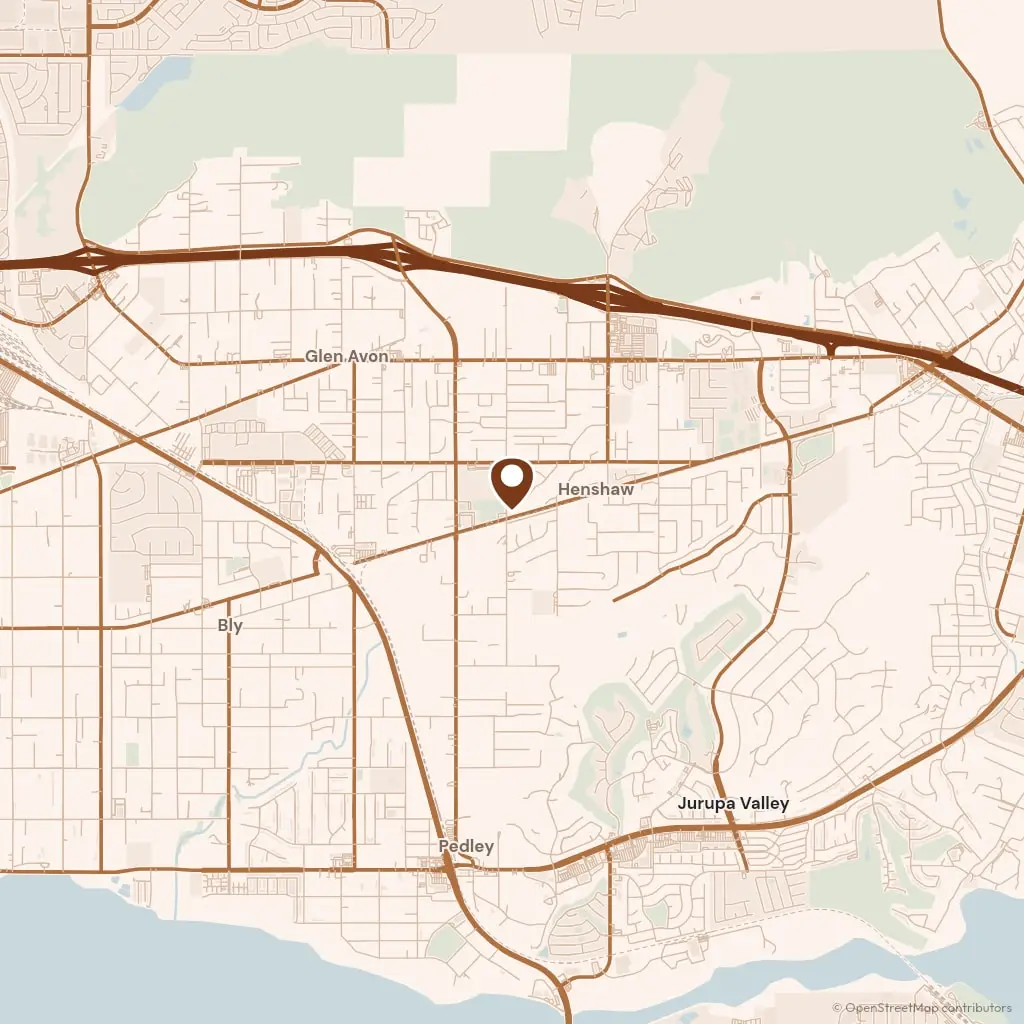
Map showing SkyVale Jurupa Valley Concrete in Jurupa ValleyOpen the Jurupa Valley Office in Google Maps
SkyVale Jurupa Valley Concrete

Need Concrete Work Done in Diamond Bar?

Give us your street and a sentence about the job. The call back comes within 1 business day, the visit costs nothing, and what we build carries a written workmanship guarantee against defects in how it was built.