

Serving Jurupa Valley, CA and surrounding areas.(951) 555-0159
SkyVale Jurupa Valley Concrete

Concrete Driveway Building in Jurupa Valley, CA for Long Rural Frontages

SkyVale Jurupa Valley Concrete pours drives that run 60 to 200 feet from the road to the house, dug to firm ground and thickened where the load actually lands. Every estimate is measured and written on site.

Google reviewsFacebook reviewsBetter Business Bureau reviews5.0 Stars Rated by our customers · Google, Facebook and the BBB
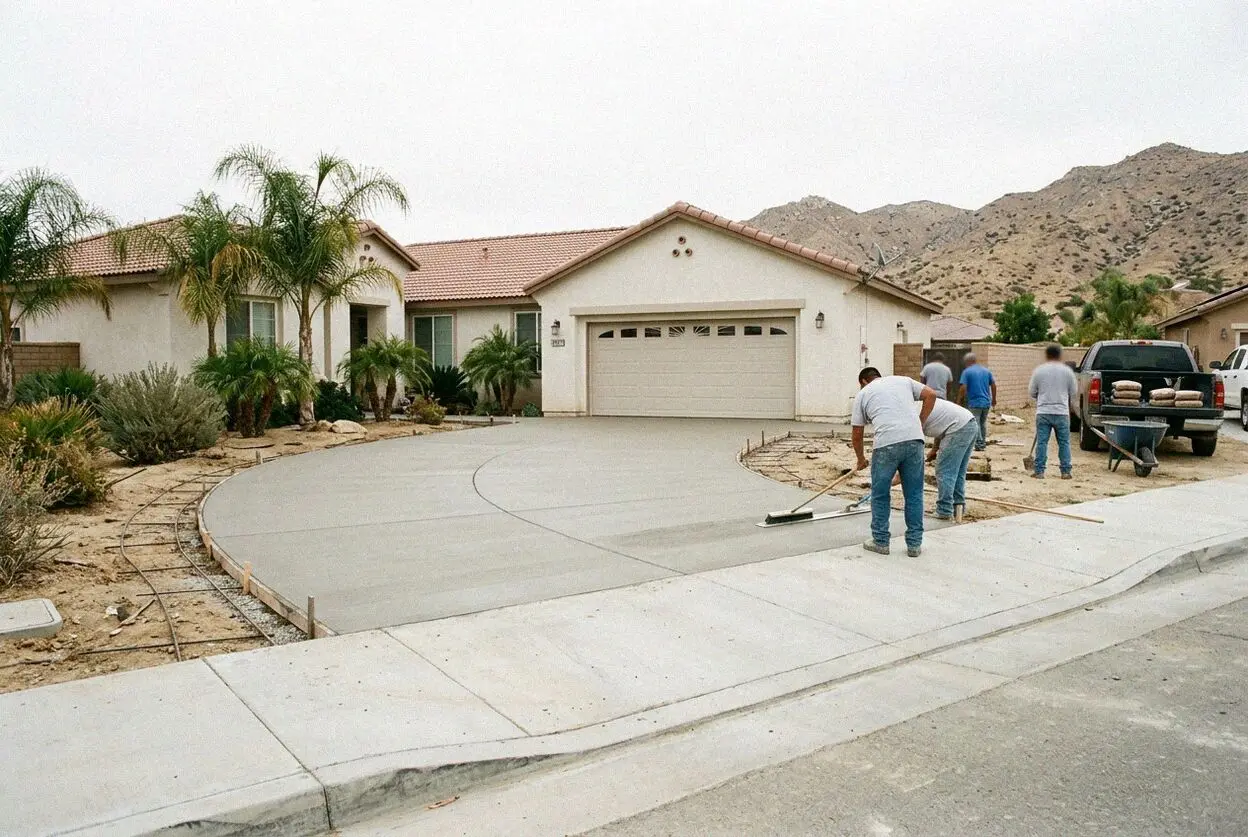
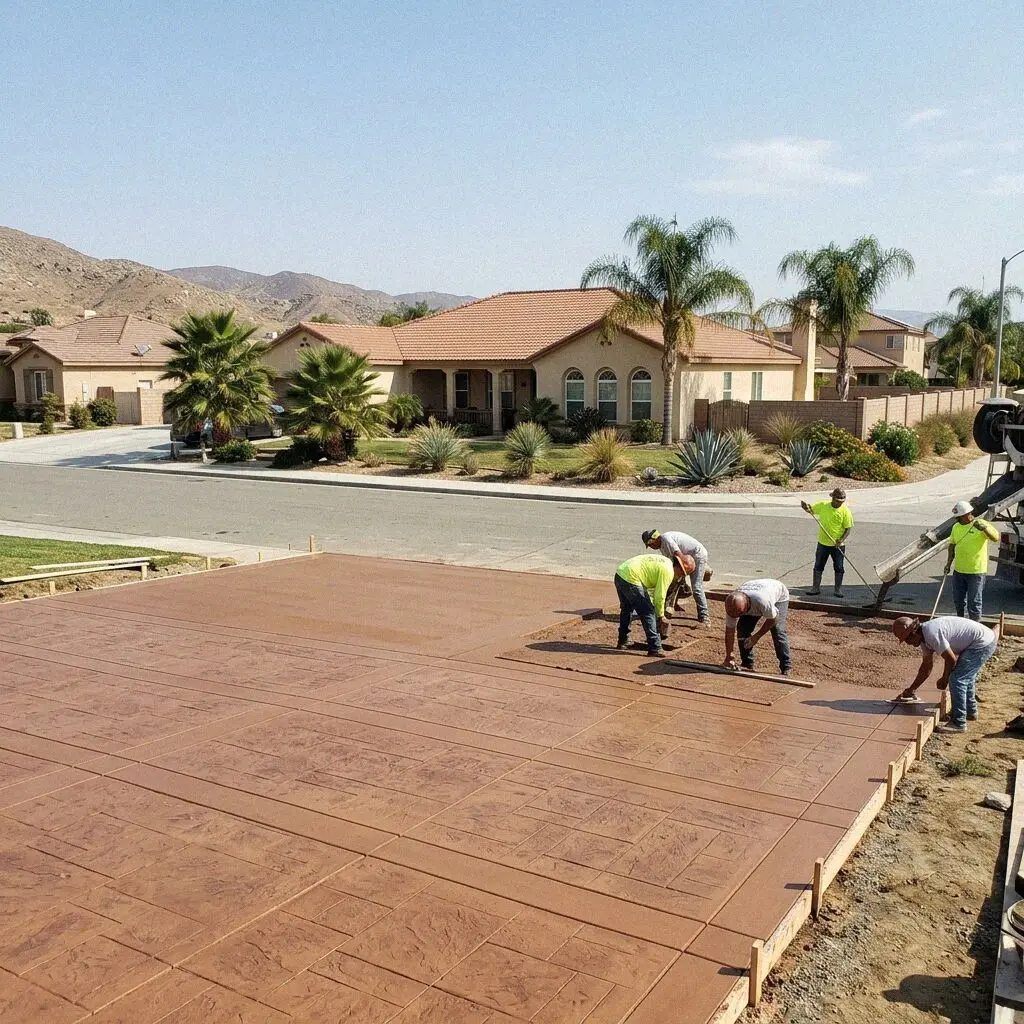
Long concrete driveway being poured at a Jurupa Valley, CA home
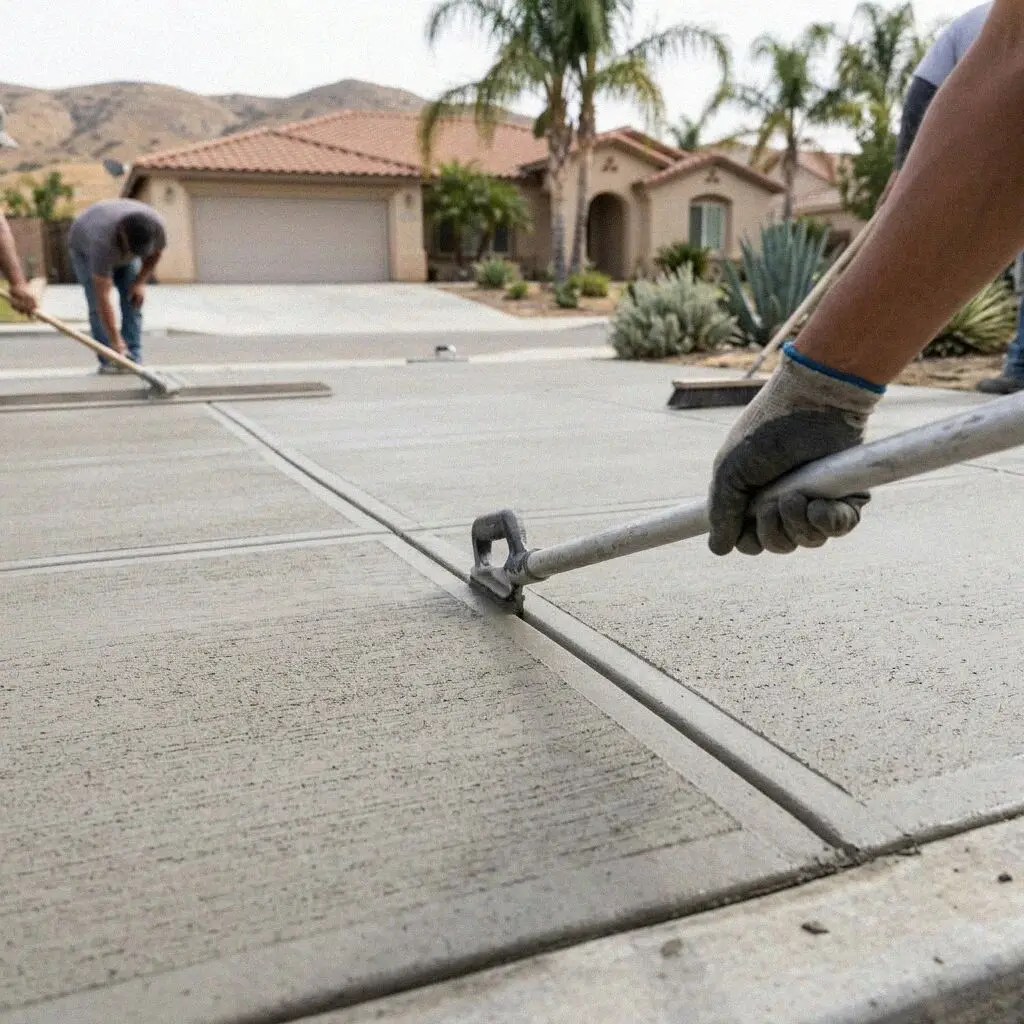
Hands tooling the formed edge of a fresh driveway slab in Jurupa Valley

How a drive is built here

Pouring a Driveway on a Jurupa Valley Lot

A long drive fails at its two ends before it fails in the middle. The stretch at the road takes every wheel that turns in off the shoulder, and the stretch at the house takes weight standing still all night. Build those two lengths deeper than the run between them, on ground that has been dug and proved, and the concrete lasts the 30 to 40 years it is good for.

SkyVale Jurupa Valley Concrete was founded in 2025 by Daniel Reyes, who spent 12 years on Inland Empire flatwork crews first, and he is on the lot for every pour. Nearly every drive standing here today was laid while this was unincorporated county land, poured to whatever the owner asked for rather than to one standard, which is why two neighbours on the same street can have 3 inches and 6 inches under their wheels.

Drives are built to the California Residential Code under a CSLB C-8 concrete license, with liability insurance on every job. Anything reaching the shoulder, the culvert or the public right-of-way is an encroachment permit from the city's Public Works and Engineering Department, which has issued this city's own permits only since 2011, and we meet the inspector on the day. The finished drive carries a written workmanship guarantee against defects in how it was built.

Repair or replace

When is a Jurupa Valley driveway past repairing?

Cracks fanning at the turnaround

A trailer or a horse box pivots on one axle, and that grinds a load into a few square feet that no car ever puts there. Cracks spreading out from that spot mean the slab is too thin for what turns on it. Sealing them leaves the turning load exactly where it was.
The edge crumbling into dirt

Plenty of streets here have a dirt shoulder rather than a curb, so a drive edge is holding itself up. Once a wheel drops off the side the concrete breaks back an inch at a time, and every rain then runs under the slab through the gap it opened.

Grit washed across the slab

Decomposed granite coming off the higher ground arrives as a wash of sharp sand after a storm. Where it piles against the drive it dams the fall and holds water on the edge for days. The surface it sits on stays wet, and the base beside it goes soft and stays that way.

Cracks midway between joints

On a run of 100 feet or more, joints set too far apart let the slab crack where it chooses instead of where it was cut. A wandering crack halfway down a panel is that, and it will keep opening as the concrete shrinks. The panel layout has to be redrawn, not filled.

In every drive

What Goes Into a Jurupa Valley Driveway

Eight things are in every drive at no separate line, and each answers something this valley does: runs long enough to cross two kinds of ground, no curb to hold an edge up, and trailers turning where cars never go.

The old run comes out

Every foot of the old drive is broken out and hauled to the crusher the same day, down to soil, however long the run is.

Ground opened in 3 places

A 150-foot drive can cross river sand at one end and granite grit at the other, so the ground is opened at the road, the middle and the house.

Base proved under a plate

Class 2 base goes in shallow and every layer is plate-compacted, so the bed is tested before a form board is set anywhere on it.

Edges formed and thickened

Where the drive meets a dirt shoulder the slab is deepened at the side and the edge tooled, the detail that holds a curbless drive together.

Depth set where load lands

4 inches on the open run, 5 to 6 where a truck, a trailer or a horse box stands or turns. The depths are printed on the estimate you sign.

Joints on a measured grid

Saw cuts go in inside 12 hours at 2 to 3 feet for every inch of depth, in panels as near square as the width of the run allows.

Fall carried the whole way

The grade is shot from the house down to the shoulder in one pass, so a long drive sheds a storm at the road instead of partway along it.

Walk-through and guarantee

We walk the run with you against the estimate - depths, base, joints, finish - and the written guarantee is handed over before we leave.

How it can be built

Jurupa Valley Driveway Builds, Compared

Four ways to build a drive on a lot this size, set against the length of the run and what stands at the end of it. Everything under the concrete is the same in all four, so the table is about the slab itself.

OptionSuitsSteel in itLifeBack in use
4-inch broom finishCars on a run under 60 feetFiber through the mix only30 to 40 years7 days for a car
5-inch run to the houseA work truck or van kept at homeWelded mesh at mid-depth30 to 40 years7 days, 28 for the truck
6-inch turnaround and padTrailers, horse boxes and RVsNumber 3 rebar on a mat35 years or more28 days before the trailer
Two-strip ribbon driveRuns past 150 feet on a wide lotRebar down each strip30 years or more7 days for a car

Ribbon strips take about half the concrete of a full run and ask you to keep the middle mown; the 6-inch turnaround is the one part nobody can add afterwards.

Concrete crew at work on a residential driveway in Jurupa Valley

Ground and length

Why Drives Run Long in Jurupa Valley

Two things set a drive here and neither is the concrete: the length of the run, and ground that can change twice between the road and the house.

Down in the flats the drive sits on Santa Ana River bottom, sand and rounded cobble that a wet winter moves and that runs out from under an unsupported edge. Up toward the Jurupa Hills it is decomposed granite, which sets like rock while it is dry and turns to slurry once it is saturated, so it has to be cut out and replaced with crushed base rather than compacted where it lies. One lot hands you both, which is why the ground is opened in more than one place before a figure is written.

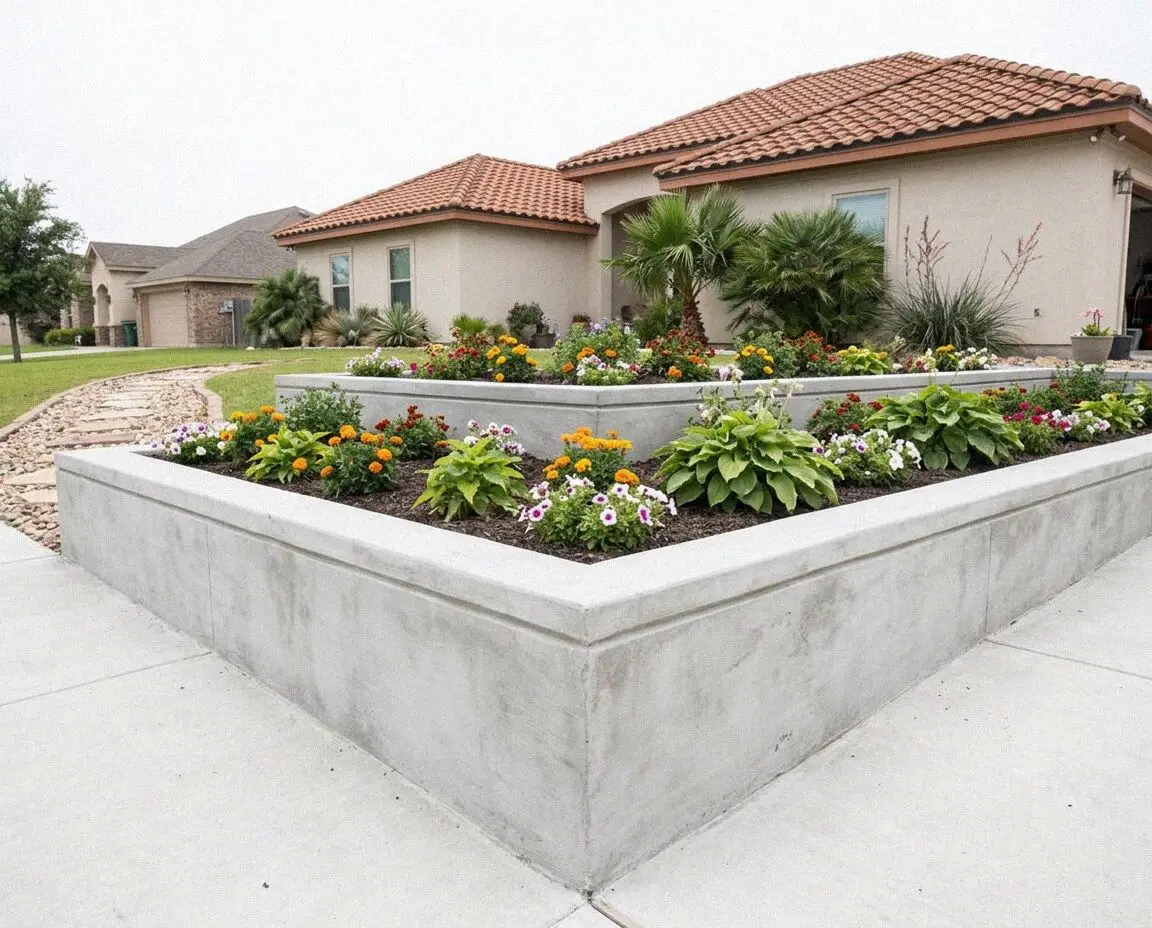
Length is the second. Lots laid out before the city existed put the house well back from the road, and a 200-foot drive is four times the forming, four times the fall to hold and four times the chance of crossing something soft. Add the trucks and trailers that come home from the Mira Loma warehouse corridor and stand on the concrete overnight, and the same drive is doing two jobs. Where a run is cut into a bank we build the retaining wall with it.

From call to cure

How We Build a Jurupa Valley Driveway

Five stages, the same crew at each, and the person who measures the run is the person standing on it at the pour. Any work reaching the shoulder is permitted before the breaker starts.

1

Measure the run, open the ground

Daniel Reyes walks the whole length, measures it, shoots the existing fall and digs test holes at both ends. The figure is written before he goes.

2

Choose the build and the week

You set the depths against what parks and turns on it, pick the finish, and take a date. Right-of-way work is filed with the city first.

3

Break out and dig to firm ground

The old run goes to the crusher, then soft sand or wet granite grit is dug out until the subgrade proves under a plate rather than by eye.

4

Base in, forms set, concrete down

Base compacted in layers, forms set to the fall the length needs, then a pour started before 8 AM through the summer and broomed across the travel.

5

Cut, cured and handed over

Joints sawn inside 12 hours, the slab kept damp seven days, the shoulder raked back, and the paperwork handed to you on the walk-through.

Behind the number

What Sets the Estimate on a Jurupa Valley Drive

Length starts the figure and the ground finishes it. Two drives measuring the same can be a day apart in work once the test holes are open, which is why nothing is quoted from a map or over the phone. Every estimate is measured and written on site.

How far it runs

A drive from the road to a house set 200 feet back is four times the forming, the base and the concrete of a tract frontage of the same width.

What the holes turn up

River sand wants base and edge support; saturated granite grit has to come out and be replaced. Most lots here give some of each along the run.

Where the trailer turns

A turnaround, an RV bay or a horse box pad is 6 inches on rebar rather than 4, so the deep part is measured and priced as its own area.

The shoulder and the culvert

Meeting a dirt shoulder means forming and thickening the edge, and a culvert under the approach is right-of-way work, permitted and inspected.

The visit and the written figure cost nothing, and the call that books a time for it comes within 1 business day. (951) 555-0159 or send us a message.

Ready to have your Jurupa Valley drive measured?

Send the form or call, and someone rings back within 1 business day to fix a time. Daniel Reyes measures the run, opens the ground and writes the figure at your property, and you are free to put it in a drawer.

Request a Free Estimate

Written on site · No obligation

By submitting, you agree to our disclosure and consent terms, including being contacted by SkyVale Jurupa Valley Concrete.

Drives we replaced

Three Jurupa Valley Drives, in Their Owners' Words

Three reviews left on Google, Facebook and the BBB, each about a driveway rather than a patio or a slab, and each naming the length or the depth that was poured.

Google review

“Ours runs 180 feet from the road up to the house and the last third had broken into pieces. They dug out granite grit that had gone to mud, rebuilt the base and poured the whole run at 5 inches. It has had a winter on it now and it is dead flat.”

Alma C. of Jurupa ValleyFull driveway replacement · Google · 2026
Facebook review

“I bring a flatbed home most nights and turn it at the top of the drive, which had cracked in a fan. Daniel poured that section at 6 inches on rebar and left the rest at 4. The truck has been standing and turning on it since spring with no mark at all.”

Reuben O. of Jurupa ValleyTurnaround and truck pad · Facebook · 2026
BBB review

“There is no curb on our street and the drive had crumbled away down both sides. They formed and thickened the edges this time and reset the fall so the storm water gets to the shoulder. Two heavy rains since and nothing has run under the slab.”

Nadine P. of Jurupa ValleyDriveway rebuild with formed edges · BBB · 2025

Before you book

Driveway Questions Asked in Jurupa Valley

What a long run costs in time, what the estimate covers, which parts the city permits, and what is guaranteed once the forms are off - answered for a drive on a lot here.

(951) 555-0159
  • What makes one driveway estimate larger than another?

    Three things, and only one of them is the square footage. The length of the run sets the forming and the fall; what the test holes find sets how much has to come out before base goes in; and the depth is decided by the heaviest thing that stands or turns on the slab. A short frontage over clean sand and a 200-foot run over saturated grit are different jobs. All three are measured at your lot and written down.

  • How long is a crew on site for a long drive?

    Three to four days for a run past 100 feet, against one to two for a short frontage: a day to break out and haul, a day to dig and compact base along the length, and a day to form, pour and finish. After that the concrete is kept damp for seven days, which is when a car can go on it. Nothing about that week is shortened for heat - through July and August the truck simply arrives before 8 AM.

  • Does the estimate cover taking the old drive away?

    Yes. Breaking out the old run, loading it and hauling it to a crusher is written into the figure, however many feet of it there are, and so is the dig-out of anything soft found underneath. What sits outside the figure is named at the visit rather than added later: an encroachment permit fee, a culvert the county laid that has collapsed, or a gate that has to be moved. The number you sign is the one on the bill.

  • Which parts of a driveway does the city permit?

    Nothing inside your property line - the Residential Code exempts a driveway slab. The approach across the right-of-way, the culvert under it and any work at the public walk take an encroachment permit from the city's Public Works and Engineering Department, which has run its own counter since incorporation in 2011; older approaches here were signed off by the county. We file the paperwork and meet the inspector.

  • Will homeowners insurance pay to replace a cracked drive?

    Almost never. Policies here treat settlement, shrinkage cracks and ordinary wear as maintenance rather than as a sudden loss, so a drive that has broken up over 20 years is the owner's to replace. The exception is damage from a covered event, a vehicle striking it or a burst service line washing the base out. Photograph it before anything is broken out, and ask your carrier before you book us.

  • What is guaranteed once the drive is finished?

    How it was built: the depth dug, the base compacted, the thickness poured, the joint spacing and the finish left on it, with those terms printed on the estimate before you sign. It is a written workmanship guarantee against defects in how it was built. Staining, tire marks, wear and ground moving beyond what the joints are cut to control sit outside it. Where the fault is ours we come back and put it right.

  • What concrete and steel actually go into the slab?

    A 3,500 psi ready-mix placed the morning it is batched, Caltrans Class 2 aggregate base underneath it, and number 3 rebar through anything poured at 6 inches. A 4-inch run carries fiber in the mix, and a 5-inch section takes welded mesh at mid-depth. The mix design and the steel are named on the estimate, so what arrives on the truck can be checked against what you agreed to.

  • Do I have to be home while the drive is poured?

    Only for the measurement at the start and the walk-through at the end. In between the crew needs water, an unlocked gate and the cars off the run, and a long drive means yours will be on the street for the best part of a week. If the drive is the only way in, tell us at the visit and the run is poured in halves so there is always a way to the house.

Towns we pour in

Concrete Driveways Around Jurupa Valley

The eight nearest towns on the list, with the straight-line distance from the office on Limonite Avenue beside each. Every drive is measured at the property before a figure is written.

Show All Areas We Serve

Book a free measure of your Jurupa Valley drive

Call or send the form and you hear back within 1 business day. Say roughly how far the house sits from the road and what parks at the top of it, and the visit can be booked for a day inside the same week.