

Serving Jurupa Valley, CA and surrounding areas.(951) 555-0159
SkyVale Jurupa Valley Concrete

Decorative Concrete in Jurupa Valley, CA for Long Drives and Open Yards

SkyVale Jurupa Valley Concrete colors, stains, washes back and saw-cuts concrete on the large lots either side of the river, new pours and old slabs alike. Every estimate is measured and written on site.

Google reviewsFacebook reviewsBetter Business Bureau reviews5.0 Stars Rated by our customers · Google, Facebook and the BBB
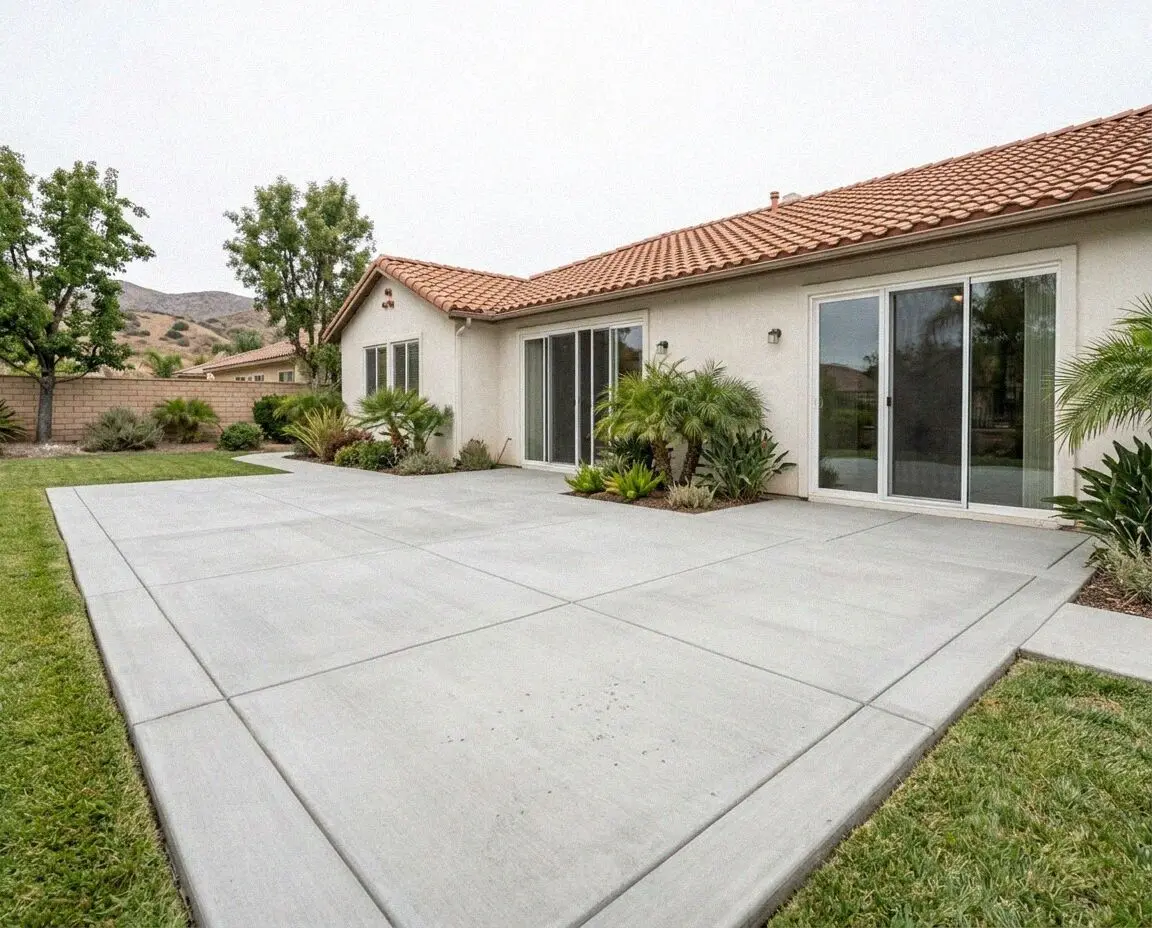
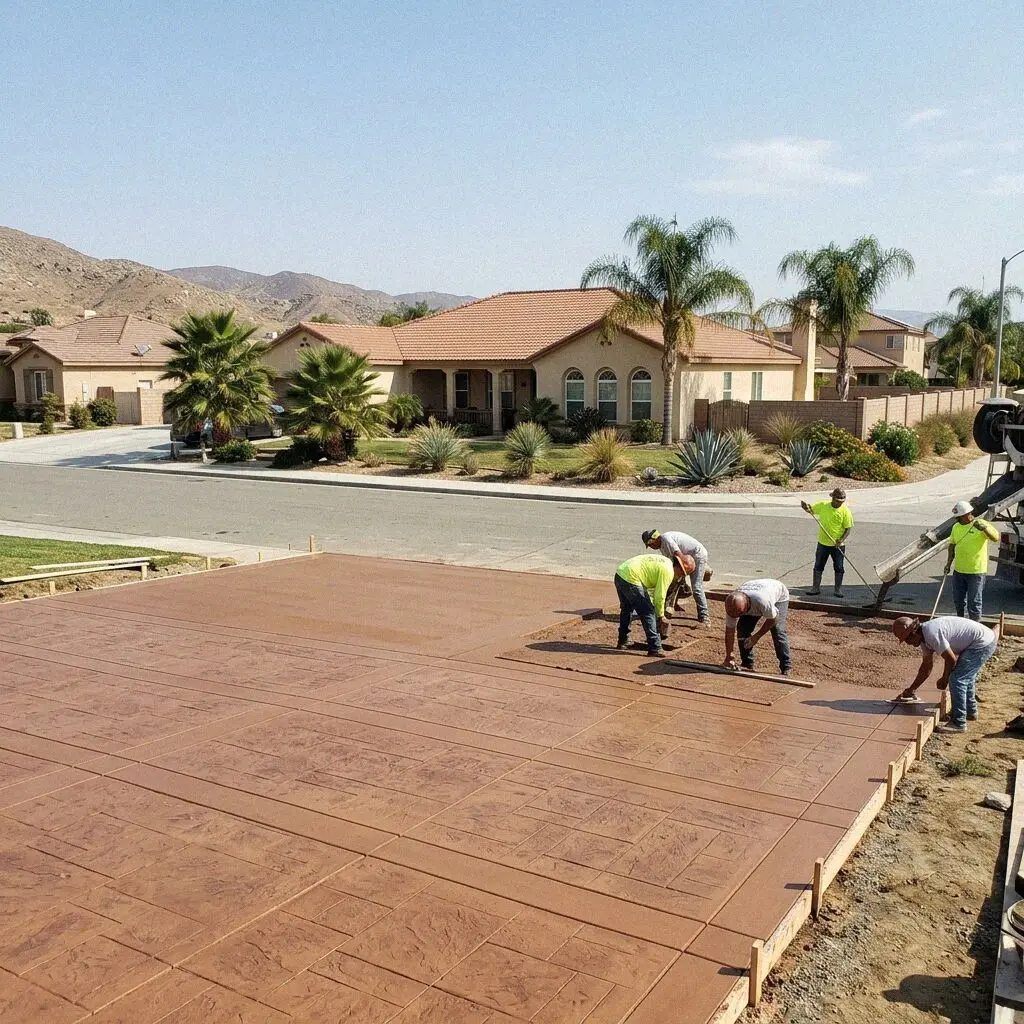
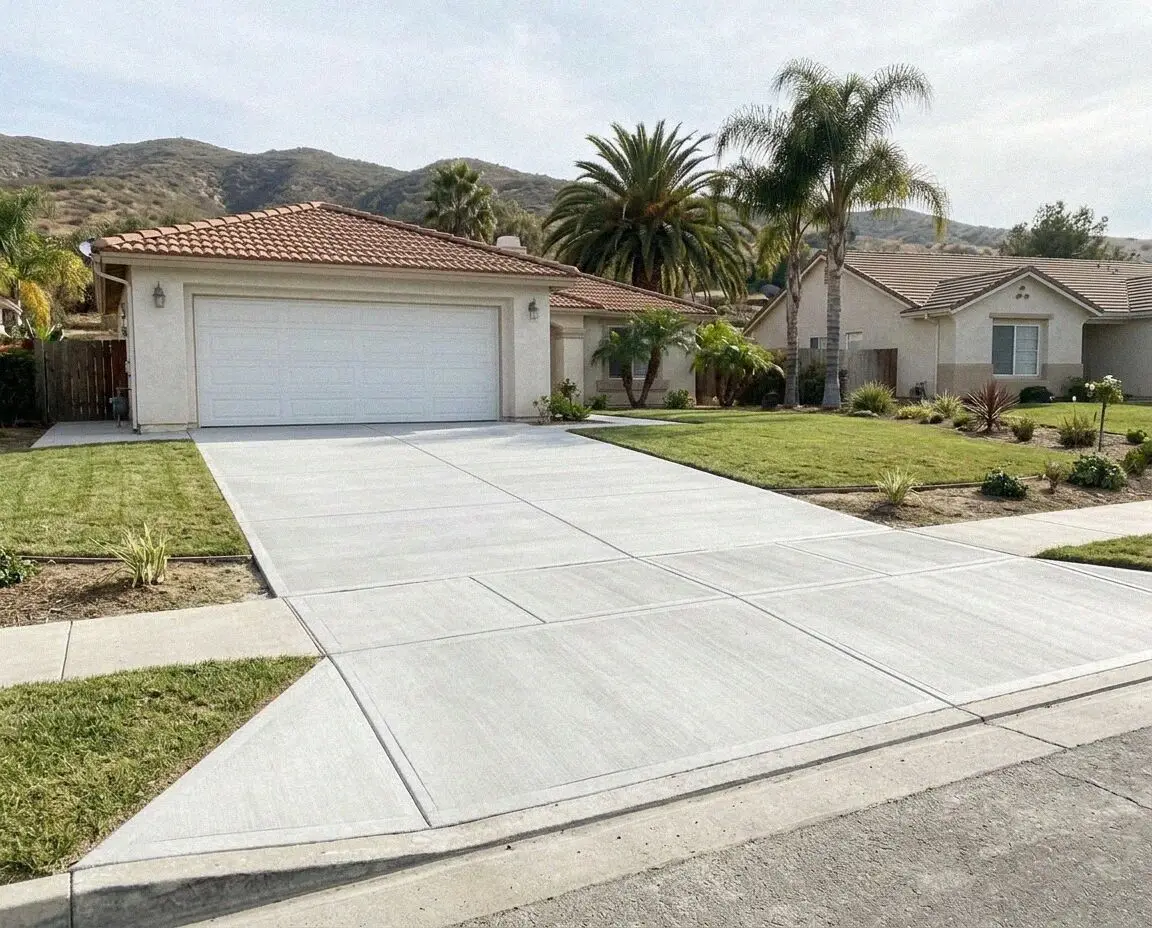
Washed aggregate concrete drive at a Rubidoux ranch home
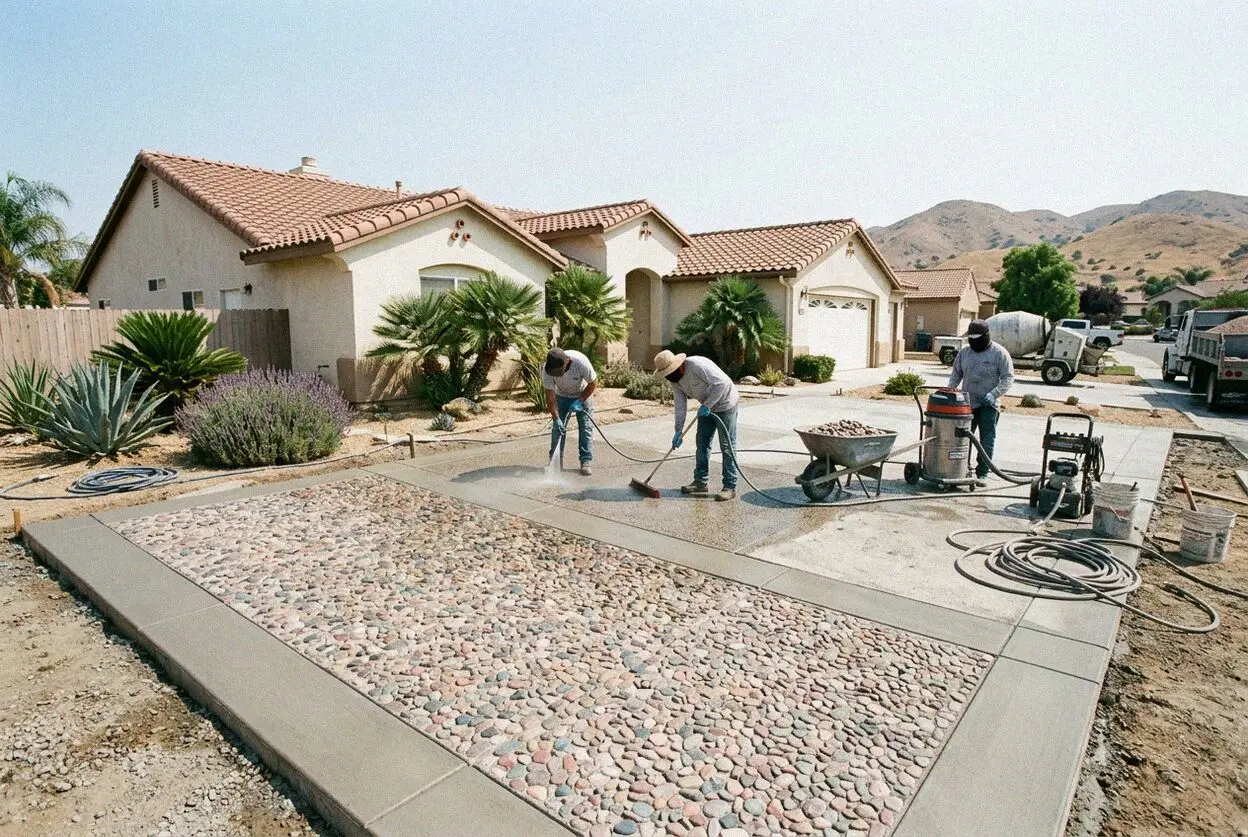
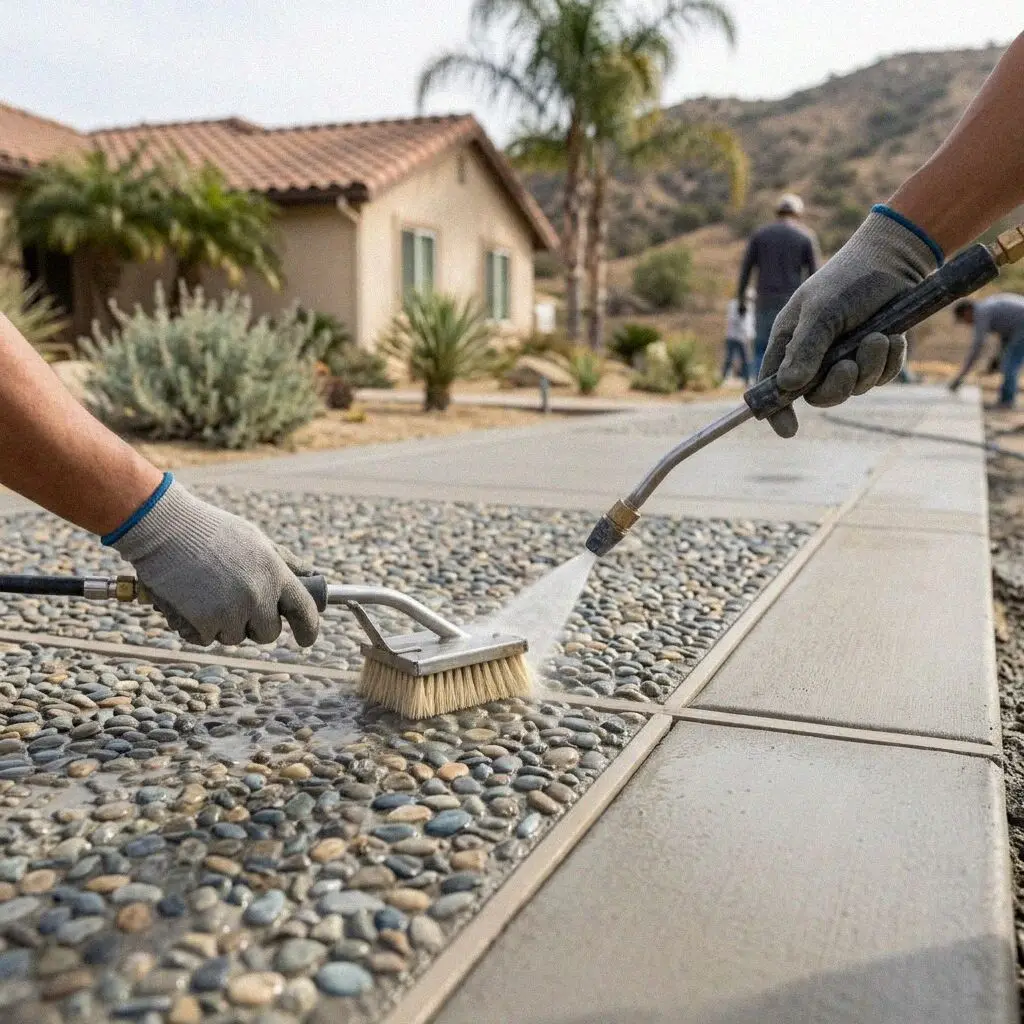
Crew washing back aggregate on a new concrete drive in Jurupa Valley

When the color arrives

The Decorative Finishes Poured and Ground in Jurupa Valley

The word decorative covers five trades on one slab, and what parts them is when the color arrives. Pigment ordered into the truck colors the pour right through. A stain works on the lime left in concrete that set hard years ago. Washing the paste off uncovers the stone in the mix. Saw cuts and a ground face add no color at all, working on light instead. Pressing a texture in while the slab is still plastic is the one that must happen at the pour, and it has its own page.

SkyVale Jurupa Valley Concrete has finished flatwork here since 2025, and Daniel Reyes brought 12 years of it to the business and still runs the trowel himself. This city sets a different problem from the older towns around it. Nearly all the housing here dates from 1970 to 2000 and sits on lots measured in acres, so the surface being finished is usually a long drive or an open yard slab, and what it answers to is stucco, a tile roof and a garage door rather than fired brick.

This is CSLB C-8 work carrying liability insurance on every job, and color work is placed and cured to the hot-weather flatwork guidance the American Cement Association publishes. A slab being kept is probed at its joints before the color talk starts. Every job opens with panels put on your own ground, because a stain pulls its tone out of the concrete under it and no two pours answer alike, and every job leaves with a written workmanship guarantee against defects in how it was built.

Warning signs

How do you tell a Jurupa Valley finish is on its way out?

Tire prints that will not wash

Park a hot car on a colored drive in August and the tread can lift the sealer with it, leaving dull prints where the tires stood. That is the coat softening at a surface far hotter than the air, not the color failing, so the film is stripped and a solvent-resistant one goes back.
A white bloom after watering

Salt travels up through a slab with the water beneath it and dries on top as a pale haze, worst on the sandy flats where irrigation soaks straight down. Coating over that bloom locks it under the film for good. The surface is washed with a mild acid and left to dry right out first.

One half faded, one half not

A drive shaded at the house end and open at the street tells you when the sealer went: the exposed half loses depth first while the sheltered half still reads as it did on the day. Ultraviolet takes the film rather than the pigment, so a wash and two coats bring the whole slab level.

A lip at a control joint

Run a foot across the saw cuts, and one panel standing proud of the next is ground moving rather than a finish wearing. On the older terraces that is clay swelling through winter and shrinking by August, and any color laid over a step shears along it, so the slab is dealt with first.

Standard on every finish

What Every Decorative Job in Jurupa Valley Includes

Eight things stand on every decorative job here, and not one of them shows up later as an extra. More than half are about the concrete beneath, because on this ground what is under a finish is what decides its life.

Panels cured a week

Two colors are brushed onto the slab you own and left a week, because a stain cures darker and flatter than it looks wet.

Read against the stucco

Samples are held to the body color, the roof tile and the garage door in open daylight, since that is the palette a finish here answers.

Ground to bare paste

Old sealer, paint and patch skim come off with a grinder, as nothing reactive will work through a film left sitting on the surface.

Cracks routed and filled

Every crack is cut out, packed and left hard before color goes near it, and where the line allows, hidden inside the saw pattern.

Color in or on the load

Pigment is dosed at the batch plant on a new pour; on cured concrete the color arrives as a reactive acid stain or a water-based one.

Cuts that work as joints

Pattern lines are cut to a quarter of the slab thickness on the joint spacing, so the design also decides where it cracks.

Two thin crossed coats

Coats go on four hours apart, the second across the first, since one heavy pass traps solvent under the film and dries milky.

Swept, walked and dated

Masking comes off, the site is swept and the waste hauled, then a walk-through with the reseal month and the guarantee on one sheet.

Four routes to a face

Decorative Finishes for Jurupa Valley Concrete, Compared

The four we lay most on these lots, set against how the color is made, what an open summer does to it and what it wants from you later on. Three of them have to be decided before the truck arrives; the fourth is the only route back for concrete already down.

OptionHow color is madeLife in our sunUpkeepWhere it fits
Integral colorBatched into all 4 inchesNo pale layer to wear throughReseal every 3 yearsA drive being poured from scratch
Reactive acid stainEtched into the top 1/16 inchGrows more mottled, not palerReseal every 2 to 3 yearsA slab you have decided to keep
Exposed aggregateThe river stone in the mixNo pigment for the sun to takeReseal every 4 yearsBarefoot ground and long drives
Saw cut and groundLight, not pigment at allSheen dulls before anything elseReseal every 2 years outdoorsShop floors and shaded slabs

Nothing here is a price. It is when the color has to be settled and how long our sun leaves it alone, which is what a wide unshaded frontage turns on.

Crew washing exposed aggregate on a long Jurupa Valley drive

Ground, stone and sun

What a Finish Has to Take on a Jurupa Valley Lot

Three things settle a finish here: how much ground it has to cover, the stone the local mixes are made of, and how many hours of open sun it stands under once it is down.

The city runs along the Santa Ana River, and the flats through Rubidoux and Belltown are sand and rounded cobble the river left. Ask the plant for a rounded local aggregate and the stone standing proud when the paste is washed off a slab here is river rock, tan and smooth, rather than a crushed chip trucked in. That is why washed aggregate is asked for most on these lots: on a 900 square foot frontage it is also the face that takes the most sun for the least attention.

Sun sets the calendar and the upkeep. Afternoons reach the mid-90s through July and August, and sealer laid on concrete that hot skins over before it levels, so coats go on at first light or in the evening and staining stops mid-morning. That ultraviolet is what puts the reseal at 2 to 3 years outdoors, nearer 2 with nothing shading the frontage. The film gives up long before the pigment does, and a surface caught before it has gone needs washing and two fresh coats rather than a grind.

Stage by stage

How a Decorative Slab Gets Finished in Jurupa Valley

Five stages, and the first two are where the choice is actually made. Everything after them is machinery and chemistry, run to a clock the weather here sets rather than one that suits the calendar.

1

Measured on your ground

Daniel Reyes measures the area, probes the joints of any slab being kept and photographs the stucco and tile the new face has to sit beside.

2

Panels, then the spec

Two candidates sit on your own slab for a week, then pigment, dilution and cut layout are set down on one sheet for you to approve.

3

Grind, repair and mask

The face is opened with a grinder, cracks are routed and filled, and stucco, thresholds and planting are masked before any acid comes out.

4

Color, wash or cut

Pigment arrives dosed in the load, an aggregate face is washed off that same evening, and stain and saw cuts wait until the slab has cured.

5

Neutralize, seal, walk it

Acid work is flushed until the runoff is clear, two coats go on once the heat is off the day, and the slab is walked with you at the end.

What changes the figure

What Moves a Decorative Concrete Estimate in Jurupa Valley

Area starts it, and on lots this size area alone can be most of the difference between two jobs. Above that the figure moves on what comes off the slab first and how much of the edge is masked and cut by hand. Every estimate is measured and written on site.

The square footage itself

A 300 foot patio and a 900 foot drive are not one job scaled up: the wider pour needs more hands to hold a wet edge right across it.

What has to come off first

Sealer, paint or a patch skim must be ground away before a stain will react at all, and that is a day gone before any color starts.

Borders and curves

A straight grid of cuts runs fast. A band in a second tone, or a curve taken round a planter, means another mask and another dry.

How far from the truck

A chute reaches the first 20 feet of a lot this size. Past that the concrete is pumped or barrowed, which is a crew day of its own.

A photograph cannot answer any of this, so the reading is done at the slab itself. The visit is free and the number is left with you in writing before we leave. (951) 555-0159 or send us a message.

Thinking about a finish on your Jurupa Valley concrete?

Send the form or ring the yard on Limonite Avenue, and someone calls you back within 1 business day. Daniel Reyes brings the samples to the property, since a color only tells the truth beside your own stucco and roof tile in open daylight.

Request a Free Estimate

Written on site · No obligation

By submitting, you agree to our disclosure and consent terms, including being contacted by SkyVale Jurupa Valley Concrete.

Jurupa Valley reviews

What Jurupa Valley Owners Say About Their Concrete Finish

Three finishes laid on lots around this city, in the words of the owners who paid for them: one drive washed back to river rock, one stained patio, one floor saved from the skip.

Google review

“Our drive runs about ninety feet up to the house and the old one had been patched gray in three shades. They washed the top off the new pour so the river rock shows, and now it looks like the ground it sits on. Two summers over a hundred degrees and it has not faded.”

Minh G. of RubidouxExposed aggregate driveway · Google · 2026
Facebook review

“I could not picture a color off a card, so he brushed two of them straight onto the back patio and left them until the following weekend. We chose the one that stopped fighting the stucco at five in the afternoon, and he wrote the mix down for when we extend it.”

Rene V. of PedleyAcid-stained rear patio · Facebook · 2026
BBB review

“The garage slab was thirty years of oil shadows and I had been quoted to break the whole thing out. They ground it back instead and sealed it in two thin coats, three days start to finish. Same concrete, and they wrote down the month the sealer wants doing again.”

Tomas B. of Glen AvonGround and sealed floor · BBB · 2025

FAQ

Questions Jurupa Valley Owners Ask About Concrete Finishes

What gets settled before a finish is picked: which routes work on concrete that has sat there for years, what survives an open summer here, and how a color is matched to stucco rather than to a chart.

(951) 555-0159
  • What decides the price of a decorative finish here?

    Two things, and area is only the first. On lots this size the ground covered is often the bigger half of the figure, because a wide pour needs more hands to hold a wet edge. After that the finish sets the labor: pigment is a single instruction to the batch plant, while a stain has to be brushed on, given time to react, then washed to neutral by hand across two days. Every estimate is measured and written on site.

  • Will a finish take on a slab I already own?

    Yes, if it is sound and sitting still. At the visit the joints are pressed for rocking, every crack is followed to its end and the thickness is read at an edge. A hairline is routed out, packed and folded into the pattern lines. A panel standing proud of its neighbour is the ground moving, and that movement prints through any finish inside two winters, so that concrete is quoted as a replacement instead.

  • Which finish lasts longest in Jurupa Valley sun?

    Washed aggregate. Nothing has been added to its face for the sun to take: what you see is the river stone the mix was batched with, and stone holds its tone. Integral pigment comes next, since the same tone carries right down through the pour and whatever wears off the top is replaced from below. Stain and a ground face do last here, though both depend on the coat above them.

  • How often will the sealer need doing again?

    Outdoors, the answer is 2 to 3 years, and the near end of it where no tree shades the frontage. Ultraviolet attacks the film and not the color beneath, which is why the coat is the sacrificial part of the job. Beneath a patio cover or inside a garage that same coat lasts 4 years. The month yours falls due goes on the hand-over sheet, because keeping to it is the difference between ten years and four.

  • How do you match a color to a stucco house?

    By carrying samples outdoors and testing them on your own slab. Most of the stock here is stucco under a concrete tile roof, built in the last third of the century, so the palette a finish answers is the body color, the trim and the garage door rather than fired brick. Two candidates are brushed onto the concrete they are meant to cover and left a week, and what you sign off on is the panel, not a chip.

  • Is a permit needed for decorative concrete work?

    Not for finishing concrete that already sits inside your own lot line. Recoloring, grinding or resealing what is already there is not something the City of Jurupa Valley Building and Safety Department asks a permit for. A new pour can need one depending on what it carries, and anything at the curb or the driveway approach takes an encroachment permit from Public Works, which we file and meet the inspector for.

  • Can this work be done through a summer here?

    Yes, with the hours moved rather than the season skipped. Above 95 degrees a sealer coat skins over before it has wetted the concrete out, and dries cloudy; acid reacts faster than it can be washed back evenly. From June through September the color work is done between first light and mid-morning, and sealing waits for the evening.

  • Is decorative work covered by the guarantee?

    How the finish was built: that the color has bonded, that the cuts hold their edge and that the coats over them stay put. It is written, handed to you at the walk-through, and its terms sit on the estimate you signed. Wear is not a defect - a slab left four years past its reseal, or a crack that opened because the ground under it moved, falls outside it.

Service area

Where We Finish Concrete Around Jurupa Valley

Ordered by distance from the Limonite Avenue yard. The grinder, the saw and the sample boards travel to every name below, and tapping one opens its page.

Show All Areas We Serve

Have a Jurupa Valley Finish Measured and Written

Book the visit and Daniel Reyes reads the concrete you have, puts two panels down on it and hands you the figure in writing before he leaves. Nothing is charged for that, and nothing is owed if the panels sit a month while you decide.