

Serving Jurupa Valley, CA and surrounding areas.(951) 555-0159
SkyVale Jurupa Valley Concrete

Concrete Parking Lot Building in Jurupa Valley, CA for Warehouse and Retail Sites

SkyVale Jurupa Valley Concrete draws a lot around the heaviest axle that crosses it rather than the number of stalls painted on it, and pours the trailer bays and dock approaches to match.

Google reviewsFacebook reviewsBetter Business Bureau reviews5.0 Stars Rated by our customers · Google, Facebook and the BBB
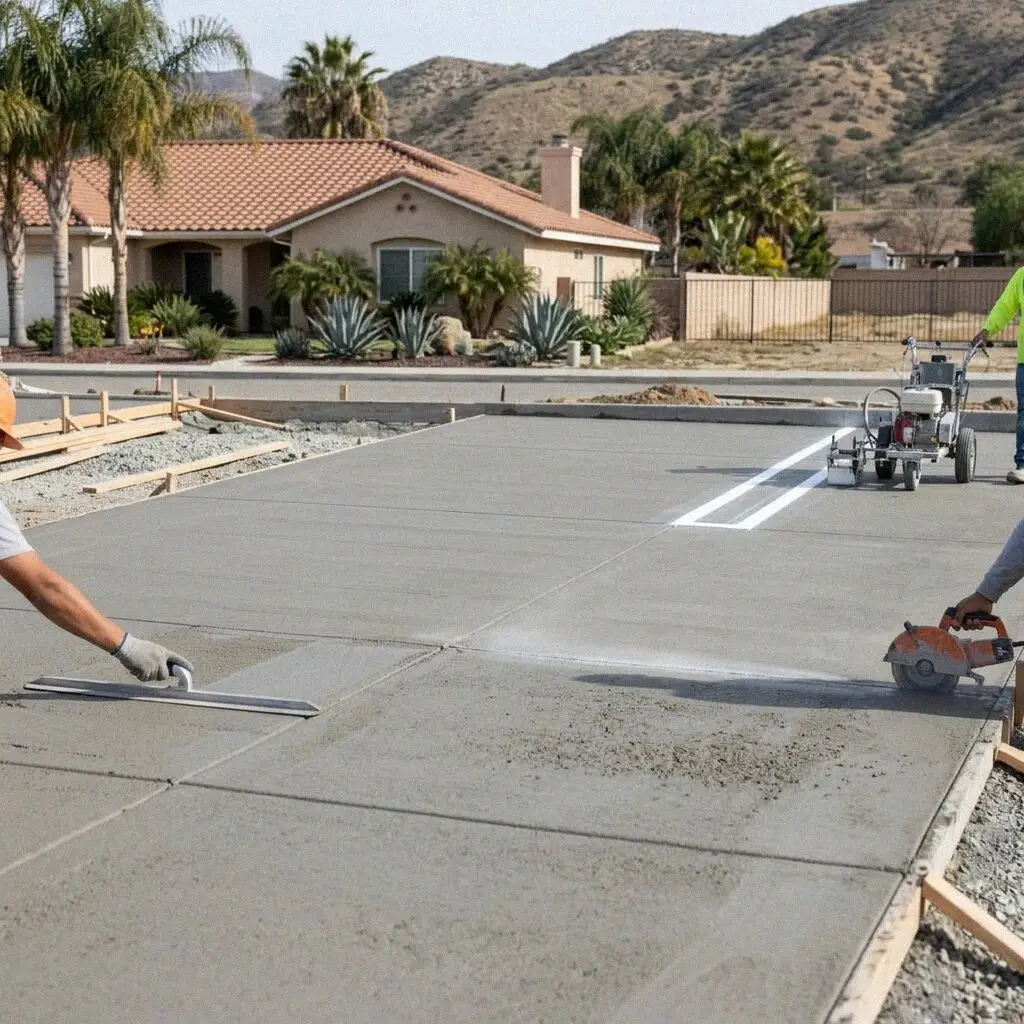
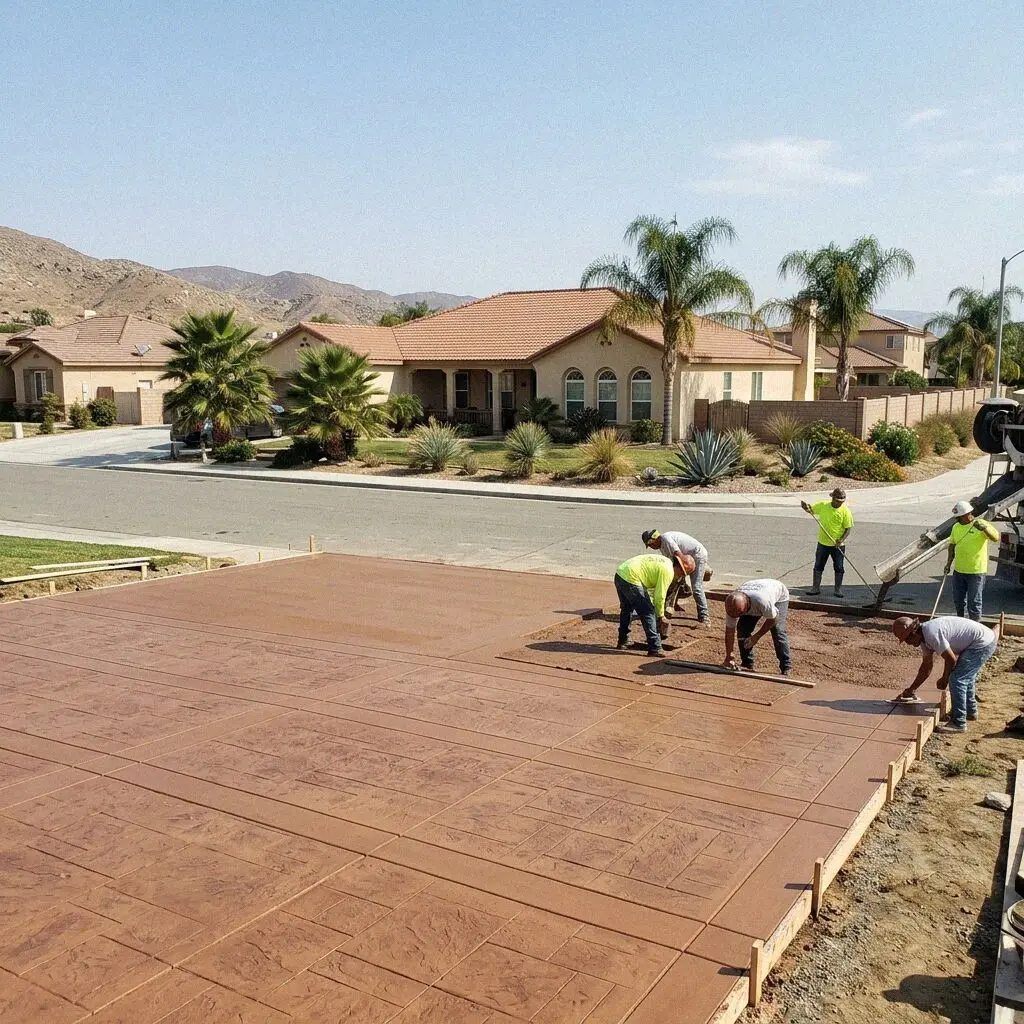
Concrete truck apron being poured at a Mira Loma distribution site
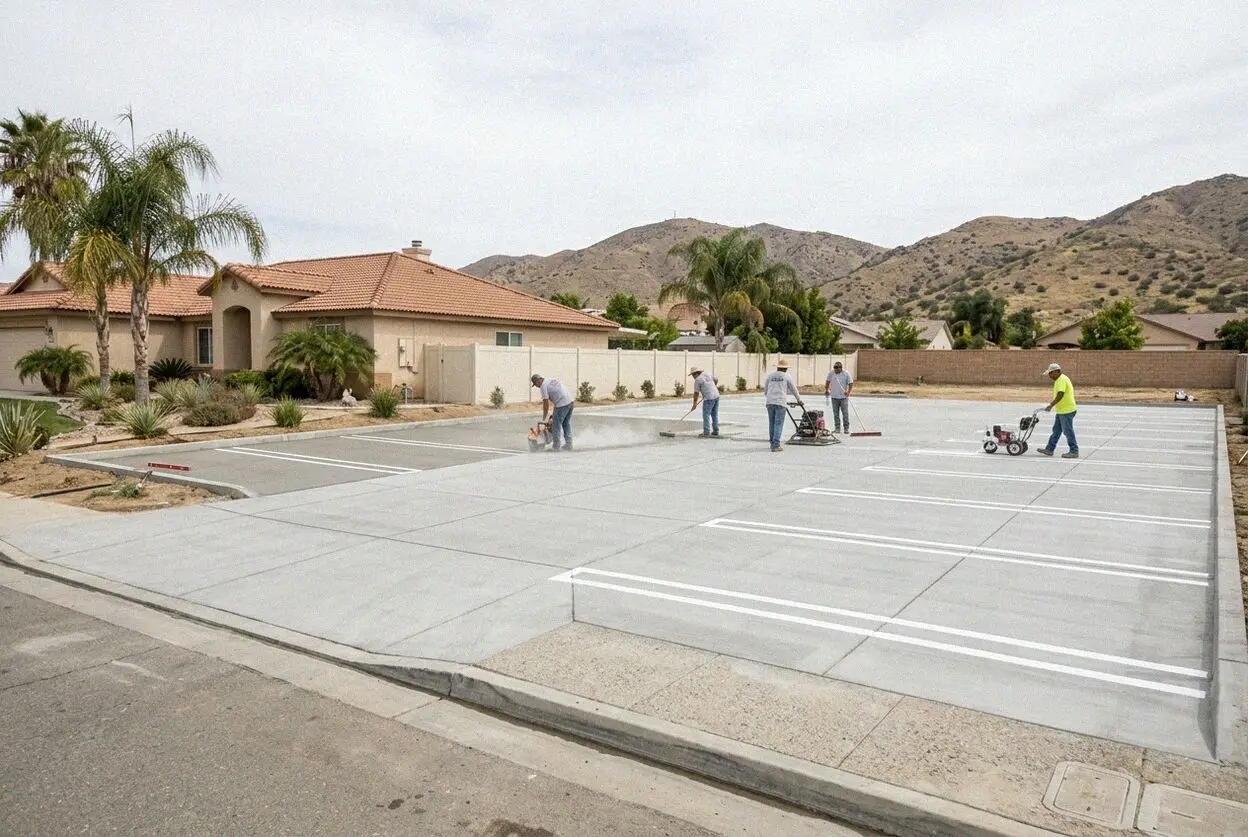
Crew screeding a concrete dock approach in Jurupa Valley, CA

Who calls us

Lots Built to a Wheel Load in Jurupa Valley

A parking lot is sized by weight, not by area. A car does nothing measurable to concrete; one loaded five-axle rig turning in off Limonite Avenue does more in a single movement than a year of commuters. So the work starts with a count of what arrives loaded and where it stops, and the stalls are fitted around the answer rather than the answer around the stalls.

SkyVale Jurupa Valley Concrete was founded in 2025 by Daniel Reyes, who spent 12 years on Inland Empire crews before it, and he sets the depths on every lot himself. Commercial ground in this city means two things: the distribution corridor through Mira Loma, where the tenant is a carrier or a freight operator, and the smaller frontage lots on Limonite and Van Buren serving markets, clinics and churches.

Lots go in under a CSLB C-8 concrete license with liability insurance on every job. A new or reconfigured one is a building permit at the Building and Safety Department, filed with a grading and drainage sheet and an accessible parking layout, and this city has only issued its own since it incorporated in 2011 - anything older than that was signed off by the county. Every lot carries a written workmanship guarantee against defects in how it was built.

Warning signs

What tells you a Jurupa Valley lot is past patching?

Gray slurry at the joints

Water squeezed out of a joint as a wheel passes, drying to a gray fan across the surface, is base being pumped up through the slab. Under the flats that base is river sand, and every axle carries a little more of it away. Sealing the joint traps the fault underneath.
One slab standing above the next

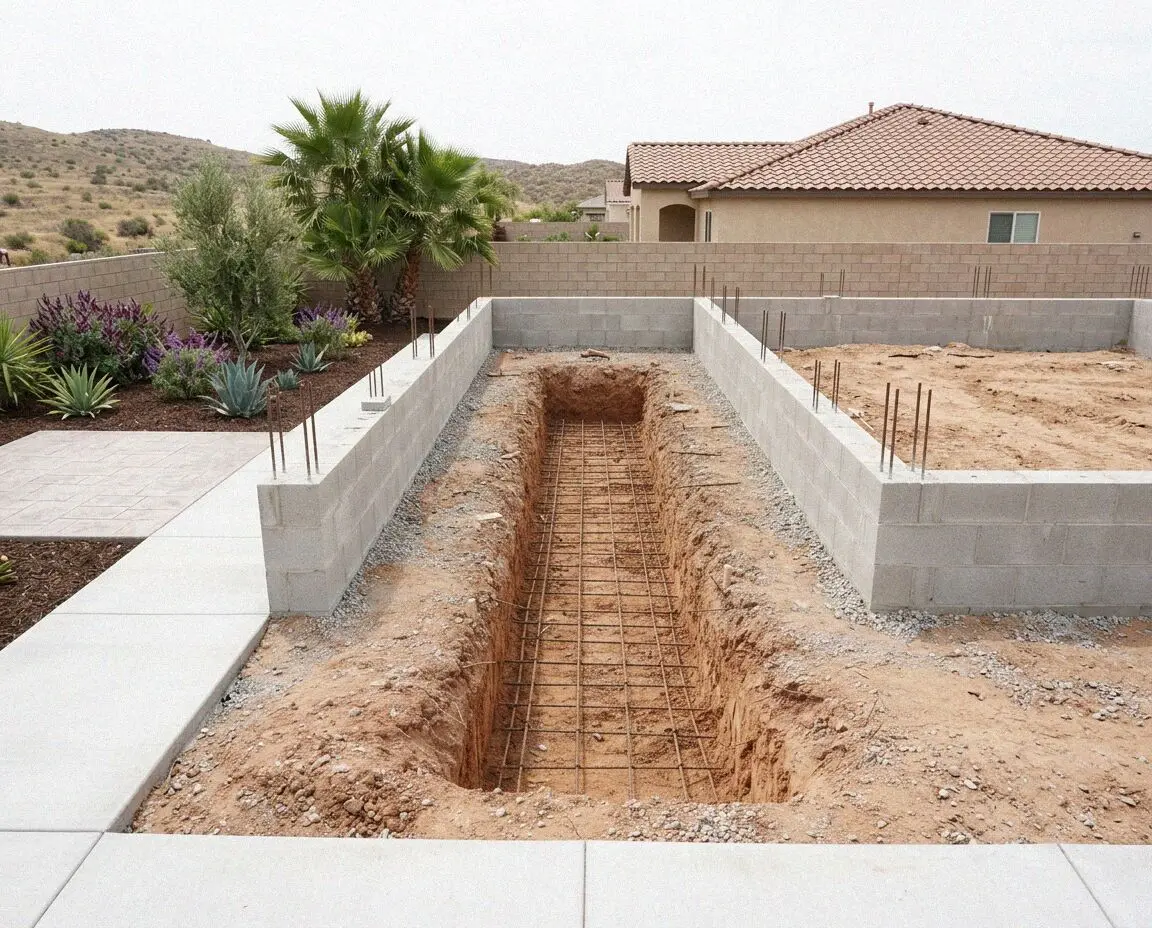
Run a boot across a lane joint and feel a step: the two panels have stopped carrying the wheel together. With no dowel through the joint the leading edge takes the whole axle and drops while the far side stays put, and each crossing after that breaks the lip back further.

An accessible stall off slope

Set a level across an accessible stall or the aisle beside it and any reading past 2 percent is a finding waiting to be written. Settlement causes it and so does an old overlay, and neither is answered with paint, because the surface itself has to come out and go back to grade.

Edges broken back at the turns

Concrete crumbling along the outside of a bay where trailers swing wide is an edge with nothing under it. The sand shoulder beside the slab washes out first, the edge is then holding weight over air, and it snaps away in lengths instead of cracking in a line.

On every lot

What Comes as Standard on a Jurupa Valley Lot

Eight things every commercial lot here gets, none of them held back to be priced later. Each answers what this ground does to concrete: sand that travels once it is wet, axles that stop in the same square yard daily, and a plan check that reads the route in.

Axle count before design

We count what arrives loaded across a working week, and the lanes and standing bays are drawn to the heaviest of it.

Depths that follow use

Stalls at 5 inches, drive lanes at 6, dock approaches and trailer bays at 8, all of it in a 4,000 psi commercial mix.

Subgrade proved first

River sand is moisture conditioned and rolled, and any pocket that pumps under a loaded truck is dug out and replaced.

Class 2 base in lifts

Caltrans Class 2 aggregate laid and compacted in layers, with the density tested and recorded before a form goes down.

Dowels where wheels cross

Smooth steel dowels through every construction joint on a driving line, so both panels take the axle and not one edge.

Joints on a 15-foot grid

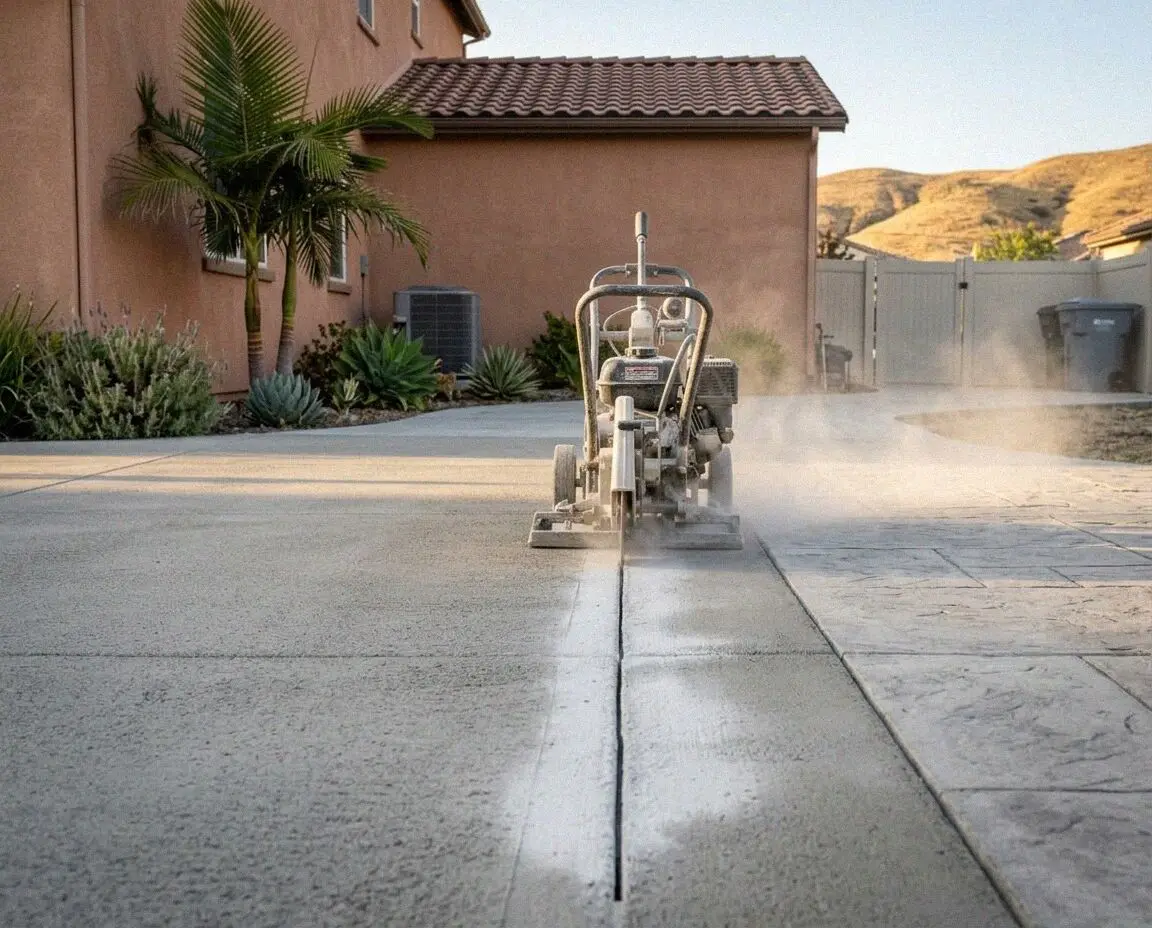
Contraction joints sawn within 12 hours in panels kept near square, set out to land between two stalls and never through one.

Accessible stalls to grade

Van and car accessible stalls, the access aisle and the route to your door formed to slope and checked with a level.

Falls to the filed grades

The surface meets your inlets at the elevations the drainage review approved, and every panel is checked before we leave.

Choosing a surface

Surfacing a Jurupa Valley Lot: Four Options

Four ways to cover a commercial lot in this city, set against the traffic each takes, how long it stands here, what it asks of you afterwards and how long the area is shut. What picks the row is the heaviest vehicle that stops on it, never the size of the site.

OptionTraffic it takesYears hereWhat it asksShut for
Asphalt pavingStaff and visitor cars, no delivery route12 to 15 years in this heatSeal at 3 years, overlay at 122 days, cars back the same week
Concrete at 5 inchesCar stalls and the aisles between them20 to 30 yearsReseal the joints every 5 years1 to 2 days, then 7 to cure
Concrete at 6 inchesDrive lanes, fire lane, refuse approach25 to 35 yearsReseal joints, sweep the grid yearly2 days a section, then 7 to cure
Concrete at 8 inchesDock approaches and trailer standing bays30 to 40 yearsCheck the doweled joints once a yearA weekend a section, 28 before rigs

Depth and dowels are the two things no one can add afterwards. Asphalt opens soonest and moves first where a rig stands still through a July afternoon.

Concrete truck apron and dock approach at a Mira Loma warehouse

On this ground

Why Lots in Jurupa Valley Are Built for Trucks

Two things decide a lot in this city: which corridor it stands in, and a subgrade of river sand that has to be proved before anything is poured on it.

Mira Loma is the commercial half of Jurupa Valley. Warehousing spread across it from the 1990s onward, and the sites either side of Etiwanda and Limonite are distribution buildings first, so what we are asked for is a truck apron, a dock approach or a trailer standing bay far more often than a shopper car park. That decides the drawing: the lanes and the bays are laid out to a wheel load, given 8 inches with dowels where the rigs stop and turn, and the stalls go in around them.

The paperwork is the other half. A good many yards here were surfaced while this was unincorporated county land, before there was a city to review them, so an old lot brought back for a permit usually comes back marked on the accessible stalls, the access aisle and the marked route in to the office door. That work lands on the same sheet as the paving and the drainage, which is why we draw all three together rather than treating the striping as a job for afterwards.

Five stages

How a Parking Lot Job Runs in Jurupa Valley

One crew, and the same person at the traffic count and at the pour. The permit and the drainage sheet are filed by us, and the order the sections close in is agreed with whoever runs the site before a saw touches the surface.

1

Site walk and traffic count

Daniel Reyes walks the lot during a working shift, counts what arrives loaded and marks where trailers stop, stand and turn.

2

Layout, depths and permit

Lanes, bays, stalls and the accessible route are drawn with a depth on each, then filed for plan check and drainage review.

3

Closure order agreed

The lot is split into sections that can each be shut on their own, and the order and the dates are set in writing around your deliveries.

4

Break out, base and dowels

Old surface out and hauled, subgrade proved with a loaded truck, base compacted in layers, dowels set at each section joint.

5

Pour, cure and hand back

Placed at first light, joints sawn within 12 hours, cured 7 days before cars go back on it and 28 before a loaded rig crosses.

Where the number comes from

Why Two Jurupa Valley Lots the Same Size Differ

Square footage sets the floor and the traffic sets everything above it. A site with six dock doors and a site with none can measure the same and still be a fortnight apart in work. Every estimate is measured and written on site.

How much of it takes rigs

Deep concrete with dowels under the truck route, 5 inches under staff stalls. That split moves the figure further than area does.

Whether the site can shut

One closed fortnight is a single mobilisation. Keeping every dock live means small sections, weekend pours and more joints to dowel.

What the subgrade turns out to be

River sand rolls up well. A pocket that pumps under a loaded truck comes out and is replaced, and that is settled in the open cut.

Drainage and the accessible route

Resetting inlets, regrading to a reviewed sheet and bringing stalls and the path of travel to slope are work the area never shows.

No figure is taken off a satellite image of your roof line. The walk costs nothing, the number is written on your own lot, and we call back within 1 business day. (951) 555-0159 or send us a message.

Ready to have your Jurupa Valley lot measured?

Send the form or call the yard on Limonite Avenue, and someone rings you back within 1 business day to book the walk. We count the loaded traffic, measure the lot and write the figure while we are standing on it, and none of that is charged for.

Request a Free Estimate

Written on site · No obligation

By submitting, you agree to our disclosure and consent terms, including being contacted by SkyVale Jurupa Valley Concrete.

Site owners

What Jurupa Valley Site Managers Say About Their Lots

Left on Google and Facebook by the people who signed off the closure dates and had to keep their gates working while we poured. All three are commercial lots rather than driveways.

Google review

“Our trailer bays off Etiwanda had rutted so deep the yard hostler was bouncing through them. They took the standing area out, proved the sand under it with a loaded truck and poured 8 inches doweled back into the lane. Two peak seasons on and it is still flat.”

R. Alcantar, Mira LomaTrailer standing bay · Google · 2026
Facebook review

“A tenant complaint put our accessible stalls in question and it grew into a repour of the whole frontage. Daniel drew it, filed it with the city and met the inspector, and we passed first time. The work ran across two Sundays so the store never lost a trading day.”

M. Ferreira, Limonite AveAccessible stalls and route · Facebook · 2026
Google review

“We could not shut the dock for a week, so they split the approach into three and took one each weekend. Every section was doweled into the last and you cannot feel a joint under a wheel now. They swept the yard clean each Monday before our trucks came back in.”

K. Whitlock, Glen AvonDock approach rebuild · Google · 2025

FAQ

Parking Lot Questions from Jurupa Valley Sites

Depths, dowels, permits, phasing and what the guarantee actually covers, answered for a commercial lot in this city rather than for paving in general.

(951) 555-0159
  • How much does a parking lot cost in Jurupa Valley?

    Area sets the floor, then the share of it that carries trucks. Eight inches with dowels under a dock approach is a different build from 5 inches under staff stalls, so two lots the same size can be a fortnight apart in labor. What lies under the old surface comes next, and after that how much of the site has to keep working while we are on it. Every estimate is measured and written on site.

  • How thick does a parking lot slab need to be?

    Five inches under car stalls, 6 through the drive lanes, the fire lane and the refuse approach, and 8 where dock approaches and trailer bays take turning rigs and standing landing gear. Depth follows the heaviest thing that stops on each area, because one loaded axle asks more of a slab than a year of commuter traffic does. Which depth lands where is drawn on the plan you sign.

  • Do I need a permit for a parking lot in Jurupa Valley?

    Yes. A new or reconfigured commercial lot is a building permit at the Jurupa Valley Building and Safety Department, filed with a grading and drainage sheet and an accessible parking layout. Anything touching the driveway approach or the public right of way takes an encroachment permit from Public Works alongside it. We prepare both, file them and meet the inspector.

  • Can you rebuild the lot without closing the site?

    Yes, by splitting it into sections small enough that your remaining lanes still route. Each one is broken out, based and poured inside its own closure, and the joint back into the slab beside it carries smooth dowels so a wheel crosses the pair as one. Cars go back on after 7 days and a loaded rig waits 28. The order and the dates are agreed before the price is fixed.

  • What is the ground under a Mira Loma lot like?

    Santa Ana River sand with rounded cobble through it. It drains fast and compacts well, which is part of why the flats carry warehousing at all, but the top of it is loose and it keeps consolidating under weight that stands in one place. So it is moisture conditioned, rolled and then proved with a loaded truck, and anything that pumps under the wheels is dug out before base is ordered.

  • How many accessible stalls does a lot have to have?

    The count comes off the total number of stalls on the approved plan, with at least one of them van accessible, and the stall, its access aisle, the slopes and the marked route to your door each have set dimensions. A lot striped before this city began reviewing its own plans in 2011 rarely still meets them, so an old lot redrawn on paper usually gains stalls on the ground.

  • Is concrete worth it over asphalt on a lot here?

    Wherever something heavy stops, yes. Afternoons here reach the mid-90s through July and August, asphalt binder softens at that point, and a rig standing on it presses in while the turns shove into waves. Concrete carries the same rig at the same temperature without moving. For a lot that sees nothing heavier than a delivery van, asphalt is still the cheaper cover, and that is the honest answer.

  • What does the guarantee on a new lot cover?

    You get a written workmanship guarantee against defects in how it was built, and its terms sit on the estimate you sign. What it covers is our work in and below the slab: the ground we proved, the compaction we recorded, the thickness under each part, the steel and the dowels, and the sawn joints. Wear, staining, a section driven on before its cure was up and plant heavier than the lot was drawn for are not.

Where we pour

Commercial Lots Around Jurupa Valley and Beyond

Sites in the eight towns nearest the yard on Limonite Avenue, with the straight-line distance beside each. Every lot is walked before a figure is written.

Show All Areas We Serve

Get Your Jurupa Valley Lot Counted and Measured

One call starts the count. Someone rings back within 1 business day to arrange a walk while your gate is working, and by the time we leave you have a written figure, a depth for each part of the lot and dates that fit around your deliveries.